Best Airports to Enter Vietnam 2026: SGN vs HAN vs DAD
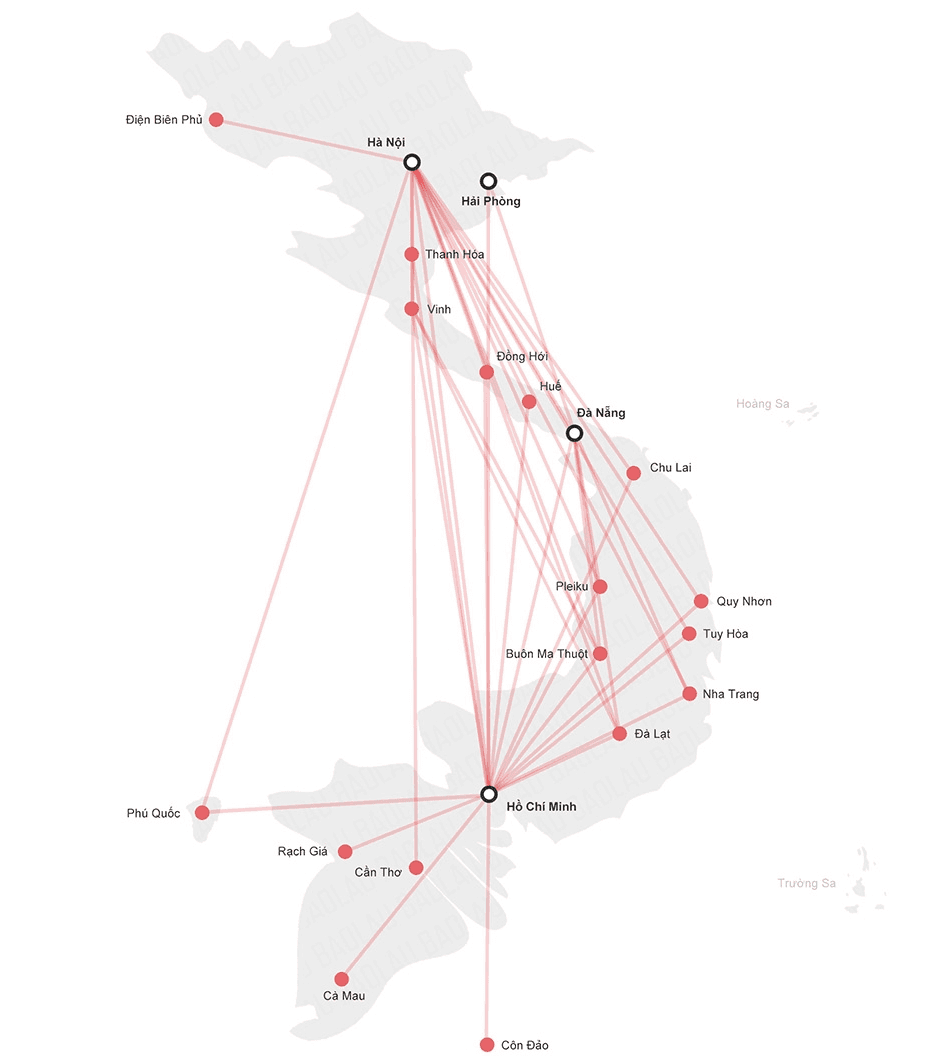
Choosing the right airport to enter Vietnam can significantly shape your entire travel experience. With three major international airports serving different regions of the country, the decision isn't always straightforward. Should you fly into the bustling metropolis of Ho Chi Minh City? Start your journey in the cultural capital of Hanoi? Or land directly in the coastal paradise of Da Nang?
Each of Vietnam's three main international airports—Tan Son Nhat (Ho Chi Minh City/SGN), Noi Bai (Hanoi/HAN), and Da Nang International (DAD)—offers distinct advantages depending on your trip goals, destinations, and travel style. Understanding these differences helps you choose the most convenient gateway that saves time, money, and hassle while maximizing your Vietnam experience.
This comprehensive guide compares all three major airports in detail, covering everything from international flight connections and immigration wait times to transportation options and fast-track services. Whether you're a first-time visitor, beach lover, culture enthusiast, or business traveler, you'll discover which airport best suits your needs—plus practical tips to make your arrival as smooth as possible.
ℹ️ Important: All international airports in Vietnam accept the e-Visa. Apply for your Vietnam e-Visa at least 2-7 days before departure, or use our 4-hour urgent processing service for last-minute trips. Upon arrival, consider booking our Airport Fast-Track Service to skip long immigration queues and start your vacation stress-free.
Quick Airport Comparison Overview
Before diving into detailed descriptions, here's a quick comparison of Vietnam's three major international airports to help you get oriented:
| Airport | Code | Location | Distance to City | Annual Passengers | Best For | Fast-Track Available |
|---|---|---|---|---|---|---|
| Tan Son Nhat International | SGN | Ho Chi Minh City | 7 km (20-40 min) | 38M+ (Busiest) | First-time visitors, Mekong Delta, South Vietnam | Yes |
| Noi Bai International | HAN | Hanoi | 45 km (40-60 min) | 26M+ (2nd busiest) | Halong Bay, Sapa, North Vietnam, business travel | Yes |
| Da Nang International | DAD | Da Nang | 3 km (10 min) | 13M+ (3rd busiest) | Beach vacations, Hoi An, digital nomads, relaxed pace | Yes |
Tan Son Nhat International Airport (Ho Chi Minh City/SGN)
Overview: Tan Son Nhat International Airport is Vietnam's largest and busiest airport, serving over 38 million passengers annually. Located just 7 kilometers from downtown Ho Chi Minh City (formerly Saigon), this airport is the primary gateway to South Vietnam and the most internationally connected airport in the country.
Best For
Tan Son Nhat is ideal for first-time visitors to Vietnam, history enthusiasts interested in the Vietnam War, street food lovers, and travelers planning to explore the Mekong Delta, Cu Chi Tunnels, or southern beaches like Vung Tau and Mui Ne. It's also the best choice for multi-city trips starting in the south and moving north.
Pros of Flying into Tan Son Nhat
-
Most international flight connections: Direct flights from major hubs including Singapore, Bangkok, Seoul, Tokyo, Hong Kong, Dubai, Kuala Lumpur, and many others. More flight options typically mean better prices and scheduling flexibility.
-
Gateway to South Vietnam: Perfect starting point for exploring Ho Chi Minh City's vibrant energy, French colonial architecture, War Remnants Museum, and Notre-Dame Cathedral.
-
Easy access to multiple attractions: Within 1-3 hours you can reach the Mekong Delta, Cu Chi Tunnels, Vung Tau beach, and Mui Ne. Excellent hub for day trips and excursions.
-
Comprehensive city amenities: Ho Chi Minh City offers the country's best nightlife, shopping, international dining, and accommodation options at all price points.
-
Fast-track service available: Our Airport Fast-Track Service can save you 60-120 minutes during peak hours at this often-crowded airport.
Cons of Flying into Tan Son Nhat
-
Can be extremely crowded: As Vietnam's busiest airport, immigration lines regularly reach 60-120 minutes during peak hours (6:00-9:00 AM and 6:00-11:00 PM). Fast-track service is highly recommended.
-
Older infrastructure: While functional, the airport facilities are older and less modern compared to Da Nang or the newer terminals at Noi Bai.
-
Traffic to city center: The 7km distance can take anywhere from 20-40 minutes depending on notorious Saigon traffic, especially during rush hours.
Transportation from Tan Son Nhat
Getting from the airport to Ho Chi Minh City center is straightforward with multiple options:
-
Grab (ride-hailing app): Most popular and reliable option. Fixed prices around 80,000-120,000 VND ($3-5) to District 1. Download the app before arrival.
-
Airport taxi: Official taxis (Vinasun, Mai Linh) cost 100,000-150,000 VND ($4-6) to city center. Always insist on using the meter.
-
Airport bus Route 109: Budget option at 20,000 VND ($0.80) but slower with multiple stops.
-
Private transfer: Pre-booked services cost $10-15 but offer convenience with meet-and-greet.
Immigration Tips for Tan Son Nhat
Peak hours: Avoid arriving between 6:00-9:00 AM (early morning flights) and 6:00-11:00 PM (evening flights from regional hubs). Immigration queues during these times can exceed 90 minutes without fast-track assistance.
Fast-track recommendation: Given the consistent crowding, booking Normal Fast-Track ($30-50) or VIP Fast-Track ($70-120) is one of the best investments you can make, especially if traveling with family, elderly passengers, or on a tight schedule.
When to Choose Tan Son Nhat
Choose Ho Chi Minh City's airport when:
- You're visiting Vietnam for the first time and want the most accessible entry point - Your trip focuses on South Vietnam, the Mekong Delta, or southern beaches - You want the widest range of international flight options and best prices - You're planning a multi-city trip starting in the south and moving north - You prefer a big city experience with extensive dining, nightlife, and accommodation choices - You're interested in Vietnam War history (Cu Chi Tunnels, War Remnants Museum, etc.)
For more about exploring Ho Chi Minh City, read our comprehensive Ho Chi Minh City Travel Guide.
Noi Bai International Airport (Hanoi/HAN)
Overview: Noi Bai International Airport is Vietnam's second busiest airport, handling over 26 million passengers annually. Located 45 kilometers north of Hanoi, it serves as the primary gateway to North Vietnam and the capital city. The airport features two terminals—T1 for domestic flights and the newer T2 for international arrivals.
Best For
Noi Bai is perfect for culture enthusiasts, business travelers, visitors heading to Halong Bay or Sapa, and anyone wanting to explore North Vietnam's stunning landscapes, ancient temples, and colonial architecture. It's also the best choice for government-related business or manufacturing industry visits.
Pros of Flying into Noi Bai
-
Gateway to North Vietnam's highlights: Best starting point for Halong Bay (2.5-3 hour drive), Sapa's rice terraces and trekking (overnight train or 5-6 hour drive), Ninh Binh's karst landscapes, and other northern attractions.
-
Rich cultural experiences: Hanoi offers Vietnam's best-preserved Old Quarter, ancient temples, water puppet theater, colonial French architecture, and deep historical significance as the capital.
-
Strong international connections: Excellent flight connections especially from China, Korea, Japan, and other Asian hubs. Growing number of European connections as well.
-
Less crowded than SGN: Despite high traffic, the airport generally feels less chaotic than Tan Son Nhat. Wait times are typically 45-90 minutes during peak hours, slightly better than Ho Chi Minh City.
-
Modern terminal facilities: T2 international terminal is relatively new (opened 2014) with good amenities and infrastructure.
-
Fast-track service available: Airport fast-track service saves 8-15 minutes with normal service and 5-8 minutes with VIP service.
Cons of Flying into Noi Bai
-
Farthest from city center: At 45km from Hanoi, the journey takes 40-60 minutes in normal traffic, potentially 90+ minutes during rush hours. This is the longest airport-to-city distance of the three major airports.
-
Fewer direct flights from Western cities: Compared to Ho Chi Minh City, there are fewer direct connections from Europe, Middle East, and Americas. Most travelers connect through Asian hubs.
-
Higher transportation costs: The longer distance means more expensive taxis and Grab rides compared to the other airports.
Transportation from Noi Bai
Several reliable options connect the airport to Hanoi:
-
Express bus Route 86: Most economical at 45,000 VND ($1.80), running every 20 minutes to Hanoi Railway Station. Takes about 60-70 minutes.
-
Grab: Most convenient option at 250,000-350,000 VND ($10-14) to Old Quarter. Fixed pricing through the app eliminates bargaining.
-
Airport taxi: Official taxis cost 300,000-400,000 VND ($12-16). Use reputable companies like Noi Bai Taxi, Mai Linh, or Hanoi Taxi.
-
Private transfer: Pre-booked airport pickup services cost $15-25 with meet-and-greet included.
Immigration Tips for Noi Bai
Peak hours: Busiest periods are 7:00-10:00 AM and 9:00 PM-12:00 AM when most international flights from Asian hubs arrive. Immigration processing typically takes 45-90 minutes during peak times without fast-track.
Fast-track recommendation: While generally less crowded than Tan Son Nhat, fast-track service still provides significant time savings, especially valuable given the long distance to reach Hanoi proper. The time saved at immigration can be spent settling into your hotel rather than standing in lines.
When to Choose Noi Bai
Choose Hanoi's airport when:
- Your trip includes Halong Bay, Sapa, or other North Vietnam destinations - You're interested in Vietnamese culture, history, and architecture more than beaches - You're traveling for business (government affairs, manufacturing sectors) - You want to experience authentic Vietnamese street food in the Old Quarter - You're planning a multi-city trip starting in the north and moving south - You prefer cooler weather (Hanoi has distinct seasons vs tropical south)
For comprehensive information about exploring the capital, read our detailed Hanoi Travel Guide.
Da Nang International Airport (DAD)
Overview: Da Nang International Airport is Vietnam's third busiest airport with approximately 13 million passengers annually, but it's rapidly becoming a favorite among travelers. Located just 3 kilometers from Da Nang city center, it's Vietnam's most modern and efficient airport, offering the quickest airport-to-city transfer of any major Vietnamese airport.
Best For
Da Nang Airport is ideal for beach lovers, digital nomads, travelers seeking a more relaxed pace, visitors to Hoi An Ancient Town, and anyone prioritizing convenience and efficiency over urban excitement. It's also excellent for families with children who want easy logistics.
Pros of Flying into Da Nang
-
Most modern and efficient airport: Newest facilities, quickest immigration processing, and smoothest operations of Vietnam's three major airports. Everything feels less hectic and more organized.
-
Incredible location (only 3km to city): Just 10 minutes from Da Nang city center and 30-40 minutes to Hoi An. No other Vietnamese airport offers such convenient access—you can be at your hotel in the time it takes to find a taxi at other airports.
-
Gateway to Central Vietnam's beaches: Direct access to My Khe Beach (one of the world's most beautiful), An Bang Beach, and Hoi An's coastal areas. Perfect for beach-focused vacations.
-
Cultural attractions nearby: Easy reach to Hoi An Ancient Town (UNESCO World Heritage), My Son Sanctuary (ancient Hindu temples), Marble Mountains, Ba Na Hills (Golden Bridge), and Hue Imperial City (2 hours north).
-
Shortest immigration wait times: Peak hour waits are typically 30-60 minutes—significantly shorter than Hanoi or Ho Chi Minh City. With fast-track service, you can clear immigration in just 5-12 minutes.
-
Growing digital nomad hub: Da Nang is rapidly becoming Southeast Asia's newest digital nomad destination, offering beaches, good internet, lower costs than Thailand, and a relaxed lifestyle.
-
Fast-track service available: Though less essential than at other airports, fast-track service is still available and gets you through in 3-7 minutes with VIP service.
Cons of Flying into Da Nang
-
Fewer international connections: Primarily served by Asian airlines with hubs in Seoul, Tokyo, Singapore, Bangkok, Kuala Lumpur, and other regional cities. Limited direct flights from Europe, Middle East, or Americas—most travelers connect through Asian hubs.
-
Smaller city means fewer amenities: While Da Nang is developing rapidly, it lacks the extensive nightlife, international dining options, and urban excitement of Ho Chi Minh City or Hanoi.
-
Less central for multi-region tours: If you want to see both North and South Vietnam, Da Nang's central location actually requires additional domestic flights or long bus/train rides to reach either end of the country.
Transportation from Da Nang Airport
Transportation is remarkably easy due to the short distance:
-
Grab to Da Nang city: Just 40,000-60,000 VND ($1.60-2.40) and takes only 10 minutes. The cheapest airport-to-city transfer in Vietnam.
-
Grab to Hoi An: 200,000-300,000 VND ($8-12) for the 30-40 minute journey to Hoi An Ancient Town.
-
Airport taxi: To Da Nang city 60,000-80,000 VND ($2.40-3.20), to Hoi An 300,000-400,000 VND ($12-16).
-
Private transfer: Pre-booked services cost $8-10 to Da Nang, $15-20 to Hoi An with meet-and-greet.
Immigration Tips for Da Nang
Peak hours: Busiest between 8:00-11:00 AM and 7:00-10:00 PM. However, even during peak times, Da Nang processes arrivals more efficiently than the other major airports, with wait times around 30-60 minutes without fast-track.
Fast-track recommendation: While Da Nang is the least crowded of the three airports, fast-track service is still valuable for travelers who want to maximize beach time, families with young children, or anyone on a tight schedule. VIP fast-track can get you through immigration in under 5 minutes.
When to Choose Da Nang
Choose Da Nang's airport when:
- Your trip focuses on beaches, relaxation, and coastal experiences - You're visiting Hoi An Ancient Town (Da Nang is the closest airport) - You want the most efficient, hassle-free arrival experience possible - You're a digital nomad looking for a comfortable base with beaches and infrastructure - You prefer a more laid-back, less hectic atmosphere than big cities - You're traveling with family and want easy logistics - You want to minimize time spent on airport transfers and maximize vacation time
Explore everything this coastal paradise offers in our comprehensive Da Nang & Hoi An Travel Guide.
Secondary Airports in Vietnam
Beyond the three major international airports, Vietnam has several secondary airports that may be relevant depending on your specific destination:
Cam Ranh International Airport (Nha Trang/CXR)
Located 30 kilometers from Nha Trang (Vietnam's beach resort capital), Cam Ranh International serves both domestic and growing international traffic. The airport has connections to major Asian cities including Moscow, Seoul, Bangkok, and Singapore, plus domestic flights from all major Vietnamese cities.
When to use: If your trip is specifically focused on Nha Trang and you can find direct international flights, Cam Ranh saves the need to connect through Ho Chi Minh City. However, most international travelers still find it easier to fly into SGN and take a short domestic flight or bus to Nha Trang.
Note: Fast-track services are not available at Cam Ranh—only the three major airports offer this convenience.
Phu Quoc International Airport
Vietnam's largest island, Phu Quoc, has rapidly expanded its international airport with direct flights from Seoul, Bangkok, Singapore, and several Chinese cities. The airport serves as a gateway to this tropical island paradise known for pristine beaches and luxury resorts.
When to use: Perfect for beach-focused vacations if you can find direct international flights. Otherwise, most travelers fly into Ho Chi Minh City and take a short domestic flight (about 1 hour) to the island.
Cat Bi International Airport (Hai Phong/HPH)
Located in the port city of Hai Phong, Cat Bi Airport primarily handles domestic traffic but has some international flights from South Korea, Taiwan, and China. It's an alternative gateway to Halong Bay (about 45 minutes away) though most travelers prefer flying into Hanoi.
When to use: Only if you find particularly convenient direct international flights and your trip focuses exclusively on Halong Bay and Cat Ba Island.
Decision Framework: Which Airport Should You Choose?
With three excellent airport options, how do you decide? Here's a practical framework based on different trip types, preferences, and priorities:
Choose By Trip Type
First-time visitors: Tan Son Nhat (Ho Chi Minh City) offers the most accessible entry point with extensive English signage, the most international flight options, and proximity to iconic Vietnamese experiences. The city's infrastructure caters well to foreign tourists.
Beach vacations: Da Nang for central coast beaches (Da Nang, Hoi An, My Khe Beach). Choose Tan Son Nhat (Ho Chi Minh City) if you prefer southern beaches like Vung Tau, Mui Ne, or plan to visit Phu Quoc Island.
Cultural and historical trips: Noi Bai (Hanoi) for North Vietnam's temples, colonial architecture, and ancient capitals. Choose Tan Son Nhat (Ho Chi Minh City) for Vietnam War history (Cu Chi Tunnels, War Remnants Museum).
Multi-city tours: Fly into one airport and out of another with an open-jaw ticket. Popular combinations include SGN (Ho Chi Minh) to HAN (Hanoi) traveling north along the coast, or HAN to DAD exploring from capital to beaches.
Business travel: Noi Bai (Hanoi) for government affairs, diplomacy, and manufacturing sector. Tan Son Nhat (Ho Chi Minh City) for finance, technology, international trade, and commerce.
Digital nomads and remote workers: Da Nang offers the best balance of beaches, reliable internet, coworking spaces, lower cost of living, and relaxed lifestyle. The airport's efficiency is a bonus for frequent travelers.
Adventure and trekking: Noi Bai (Hanoi) provides access to Sapa's rice terraces, Halong Bay kayaking, northern mountain trekking, and ethnic minority villages.
Family travel: Da Nang offers the easiest logistics with short airport transfers and beach activities. Alternatively, Tan Son Nhat or Noi Bai provide more extensive facilities and family-friendly attractions, though both benefit significantly from fast-track services to reduce wait times with children.
Weekend trips from Asia: Tan Son Nhat (Ho Chi Minh City) has the most frequent flights from Singapore, Bangkok, Hong Kong, and Kuala Lumpur—perfect for spontaneous 2-3 day getaways. See our Vietnam Weekend Itineraries Guide for complete short-trip plans.
Choose By International Connection
From Southeast Asia (Singapore, Bangkok, Kuala Lumpur, Jakarta): All three airports are well-connected. Choose based on your primary destination rather than flight availability.
From East Asia (China, South Korea, Japan, Taiwan): Excellent connections to both Hanoi and Ho Chi Minh City, with growing options to Da Nang. Hanoi typically has slightly more direct flights from China and Korea.
From Middle East and Europe: Ho Chi Minh City offers the most direct flight options through Dubai, Doha, Istanbul, Frankfurt, and Paris hubs. Hanoi has fewer but growing European connections.
From Australia: Ho Chi Minh City receives the most direct flights from Sydney, Melbourne, and Brisbane, making it the natural choice for Australian travelers.
From North America: No direct flights from the US or Canada to Vietnam. Both Ho Chi Minh City and Hanoi are easily accessible via connections through Seoul, Tokyo, Taipei, Hong Kong, or Bangkok. Choose based on destination rather than routing.
Choose By Budget
Cheapest international flights: Ho Chi Minh City (Tan Son Nhat) typically offers the most competitive pricing due to high flight frequency and competition among airlines. Budget carriers like AirAsia, VietJet, and Scoot frequently run promotions to SGN.
Lowest transportation costs: Da Nang wins decisively—just $1.60-2.40 for Grab to city center compared to $3-5 for Ho Chi Minh City or $10-14 for Hanoi.
Best overall value: Calculate total costs including international flight, airport transfer, and onward travel to your final destinations. Sometimes a slightly more expensive flight saves money on ground transportation and domestic connections.
✅ Pro Tip: Regardless of which airport you choose, the e-Visa application is identical and works at all Vietnamese airports. Apply once through our e-Visa service and you're set for arrival at any airport. For last-minute trips, our 4-hour urgent processing makes spontaneous travel possible—perfect for weekend getaways!
Combining Airports: Multi-City Trip Strategy
One of the smartest strategies for exploring Vietnam is flying into one airport and departing from another, eliminating backtracking and maximizing your time discovering different regions.
Open-Jaw Tickets Explained
An open-jaw ticket (also called multi-city ticket) allows you to fly into one city and return from another. While sometimes slightly more expensive than round-trip tickets, the time and hassle saved often make this worthwhile, especially for trips of 7+ days.
Popular Airport Combinations
Ho Chi Minh City (SGN) → Hanoi (HAN) - Classic South-to-North: Start in dynamic Saigon, explore the Mekong Delta and Cu Chi Tunnels, then travel north along the coast (via domestic flights or the Reunification Express train) through Da Nang/Hoi An, stopping at beaches and cultural sites before ending in Hanoi with easy access to Halong Bay and Sapa. This is Vietnam's most popular multi-city route.
Hanoi (HAN) → Da Nang (DAD) - Culture to Coast: Begin in the cultural capital, explore temples and history, take a Halong Bay cruise, then fly south to Da Nang for beach relaxation and Hoi An's charm. Perfect for travelers who want cultural immersion followed by beach time without the big city intensity of Ho Chi Minh City.
Da Nang (DAD) → Ho Chi Minh City (SGN) - Relaxation to Energy: Start with beaches and the laid-back Hoi An atmosphere, then transition to Saigon's bustling energy, shopping, and nightlife before flying home. Ideal for travelers who prefer easing into their trip with relaxation before experiencing urban Vietnam.
Domestic Flight Connections
Vietnam's domestic flight network is excellent, with frequent connections between all major cities. Airlines include Vietnam Airlines (full-service), VietJet Air (budget), and Bamboo Airways (mid-range). Popular routes like Ho Chi Minh City to Hanoi operate hourly with flight times around 2 hours.
Visa consideration: Your Vietnam e-Visa allows multiple domestic flights within the country—you don't need separate visas or documentation for internal travel. A single Vietnam e-Visa covers your entry airport, all domestic travel, and your departure airport.
Immigration and Fast-Track Services
Immigration Wait Times Without Fast-Track
| Airport | Off-Peak Wait | Peak Hour Wait | Peak Hours |
|---|---|---|---|
| Tan Son Nhat (HCMC/SGN) | 30-45 minutes | 60-120 minutes | 6-9 AM, 6-11 PM |
| Noi Bai (Hanoi/HAN) | 25-40 minutes | 45-90 minutes | 7-10 AM, 9 PM-12 AM |
| Da Nang (DAD) | 15-25 minutes | 30-60 minutes | 8-11 AM, 7-10 PM |
Why Fast-Track Service Matters
Airport fast-track services in Vietnam provide dedicated lanes, agent assistance, and expedited processing that can save 60-90 minutes during peak hours at Tan Son Nhat or Noi Bai. Even at efficient Da Nang Airport, fast-track reduces a 30-minute wait to just 5-10 minutes.
Beyond time savings, fast-track offers valuable peace of mind:
- Skip stressful crowded queues after long international flights - Agent assistance navigates you through the process smoothly - Particularly beneficial when traveling with children, elderly family members, or on tight schedules - Professional meet-and-greet with personalized service - VIP service includes buggy transport, lounge access, and luggage assistance
Fast-Track Service Options
Normal Fast-Track ($30-50 per person): Dedicated immigration lanes, agent escort through the process, expedited processing. Typically saves 30-90 minutes compared to regular lines. Available at all three major airports.
VIP Fast-Track ($70-120 per person): Private immigration counter, buggy transport from aircraft to immigration, VIP lounge access, dedicated baggage claim assistance, and personalized agent escort. The ultimate hassle-free arrival experience, particularly valuable for business travelers and premium passengers.
Learn more about fast-track services, benefits, and booking process in our comprehensive Vietnam Airport Fast-Track Guide.
When to Book Fast-Track
Fast-track service is especially recommended when you're:
- Arriving during peak hours (see table above for each airport's peak times) - Traveling with young children who get restless in long queues - Traveling with elderly family members who have difficulty standing for extended periods - On a business trip with tight meeting schedules - Connecting to a domestic flight with limited layover time - Flying into Tan Son Nhat (Ho Chi Minh City) where queues are consistently longest - Simply wanting to start your vacation immediately rather than standing in lines
Essential Airport Tips for All Three Airports
Visa Requirements
All international visitors (except citizens of visa-exempt countries) must obtain a visa before arrival at any Vietnamese airport. Vietnam's e-Visa system is the most convenient option:
-
Standard processing (3-5 business days): Most economical option for travelers booking in advance
-
Priority 2-day processing: Ideal for trips planned within the week
-
1-day processing: Perfect for last-minute bookings and weekend trips
-
4-hour urgent processing: For truly spontaneous travel decisions—apply in the morning and receive approval by afternoon
Apply for your Vietnam e-Visa as early as possible, or use our urgent processing service for last-minute trips. Avoid common application mistakes by reading How to Avoid Vietnam Visa Rejection.
SIM Cards and Internet
All three major airports have mobile phone SIM card vendors in the arrivals area immediately after clearing customs. Tourist SIM packages typically cost 100,000-300,000 VND ($4-12) for 30 days with generous data allowances (10-30GB). Major carriers include Viettel, Mobifone, and Vinaphone.
Having local mobile data is invaluable for using Grab (ride-hailing), Google Maps, translation apps, and staying connected. We recommend purchasing a SIM card immediately upon arrival—the convenience far outweighs the minimal cost.
Currency Exchange
While all airports have currency exchange counters, rates are typically 2-5% worse than city ATMs. For your arrival transportation needs, exchange a small amount at the airport (perhaps $20-50 USD), then withdraw larger amounts from city ATMs once you arrive at your hotel.
Major credit cards (Visa, Mastercard) are widely accepted in hotels and upscale restaurants, but cash is essential for street food, local markets, taxis, and small businesses. Read our guide on credit card acceptance in Vietnam for detailed payment advice.
Airport Facilities
All three major airports offer restaurants, cafes, convenience stores, duty-free shopping, ATMs, currency exchange, and free WiFi. Da Nang has the most modern facilities, while Tan Son Nhat has the widest variety of services due to its size. Noi Bai's international terminal (T2) is well-equipped with good amenities.
Airport lounges are available at all three airports for business class passengers, frequent flyers with status, or travelers with lounge access passes (Priority Pass, LoungeKey, etc.).
How Early to Arrive for Departures
For international departures from Vietnam, arrive at the airport 2.5-3 hours before scheduled departure time. While Vietnamese airports are generally efficient, international check-in counters can have lines, security screening takes time, and immigration queues (for exit stamps) can be surprisingly long during peak periods.
For domestic flights within Vietnam, 1.5-2 hours before departure is typically sufficient, though earlier is always safer if you're unfamiliar with the airport layout.
Frequently Asked Questions
Which is the main airport in Vietnam?
Tan Son Nhat International Airport (SGN) in Ho Chi Minh City is Vietnam's main and busiest airport by passenger volume, handling over 38 million passengers annually. However, Vietnam has three major international airports serving different regions—Noi Bai in Hanoi (26M+ passengers) and Da Nang International (13M+ passengers) are also significant gateways. The "main" airport for your trip depends on which region you're visiting.
Which Vietnam airport is best for first-time visitors?
Tan Son Nhat (Ho Chi Minh City) is generally recommended for first-time visitors. It offers the most international flight connections, extensive English signage, well-developed tourist infrastructure, and easy access to iconic Vietnamese experiences including the Mekong Delta and Cu Chi Tunnels. The city itself provides a comprehensive introduction to Vietnam with diverse accommodations, dining options, and attractions suitable for first-time travelers. However, booking fast-track service is highly recommended due to potential crowding.
Is Hanoi or Ho Chi Minh City airport better?
Neither is definitively "better"—the right choice depends on your itinerary. Choose Ho Chi Minh City (Tan Son Nhat/SGN) if your trip focuses on South Vietnam, the Mekong Delta, southern beaches, or if you want the most international flight options. Choose Hanoi (Noi Bai/HAN) if you're visiting North Vietnam, Halong Bay, Sapa, or prefer cultural/historical attractions over beaches. Ho Chi Minh City is closer to its city center (7km vs 45km) making transfers faster, but Hanoi's airport generally feels less crowded despite high traffic. Both airports benefit significantly from fast-track services.
Can I fly into one airport and out of another in Vietnam?
Absolutely! Flying into one airport and departing from another (called an open-jaw ticket) is a smart strategy for exploring Vietnam without backtracking. Popular combinations include flying into Ho Chi Minh City and out of Hanoi (or vice versa), allowing you to travel the length of the country. Your single Vietnam e-Visa works at all airports—you don't need separate visas for entry and exit from different airports. Open-jaw tickets are sometimes slightly more expensive than round-trips but save significant time and transportation costs.
Do all Vietnam airports accept e-Visa?
Yes, all international airports in Vietnam accept the e-Visa, including the three major airports (Tan Son Nhat in Ho Chi Minh City, Noi Bai in Hanoi, and Da Nang International) plus secondary airports like Cam Ranh (Nha Trang), Phu Quoc, and Cat Bi (Hai Phong). Apply for your Vietnam e-Visa once and use it at any airport. The e-Visa is valid for single or multiple entries with up to 90-day validity, far exceeding most tourist trip lengths.
Which airport has the shortest immigration lines in Vietnam?
Da Nang International Airport consistently has the shortest immigration wait times—typically 15-25 minutes during off-peak hours and 30-60 minutes during peak hours. The airport is the most modern and efficient of Vietnam's three major airports, with streamlined processes and smaller passenger volumes compared to Hanoi or Ho Chi Minh City. Even without fast-track service, Da Nang processes arrivals relatively quickly. However, for the absolute fastest entry (3-7 minutes), book VIP fast-track service at any of the three major airports.
Is airport fast-track service worth it in Vietnam?
Fast-track service is highly worthwhile at Tan Son Nhat (Ho Chi Minh City) and Noi Bai (Hanoi) where it saves 60-120 minutes during peak hours. At $30-50 for normal fast-track or $70-120 for VIP service, the time savings and stress reduction make excellent value—especially when traveling with family, on business trips, or arriving after long international flights. Even at efficient Da Nang Airport, fast-track reduces waits from 30 minutes to just 5-10 minutes. The peace of mind and immediate start to your vacation is worth the investment for most travelers. Learn more and book at our Airport Fast-Track Guide.
How far in advance should I arrive at Vietnam airports for international flights?
Arrive 2.5-3 hours before your scheduled international departure from any Vietnamese airport. While airports are generally efficient, international check-in can have lines, security screening takes time, and immigration queues for exit stamps can be surprisingly long during peak periods. Some airlines close check-in counters 40-60 minutes before departure, leaving little room for delays. Better to arrive early and relax in a cafe or lounge than risk missing your flight. For domestic flights within Vietnam, 1.5-2 hours is typically sufficient.
Can I get visa on arrival at Vietnam airports?
While Vietnam technically offers visa on arrival for some travelers, we strongly recommend applying for e-Visa in advance rather than relying on visa on arrival. The e-Visa process is fully online, faster, and more reliable. Visa on arrival requires pre-approval letters and involves additional queues upon landing—exactly what you want to avoid after a long flight. Our e-Visa service offers standard (3-5 days) to urgent (4 hours) processing, making advance e-Visa applications convenient even for last-minute trips.
Which airport is closest to Halong Bay?
Noi Bai International Airport in Hanoi (HAN) is the closest major airport to Halong Bay, located approximately 150 kilometers (93 miles) away—about a 2.5-3 hour drive. While Cat Bi International Airport in Hai Phong is technically closer to Halong Bay (about 45 minutes), it has limited international connections and most travelers prefer the convenience of flying into Hanoi. From Hanoi, you can join an organized Halong Bay cruise tour that includes transportation, or arrange private transfer directly to Halong Bay. Most multi-day Halong Bay cruises offer pickup from Hanoi hotels. Read our Hanoi Travel Guide for more about planning your Halong Bay visit.
Conclusion: Choose the Right Gateway to Your Vietnam Adventure
Selecting the best airport to enter Vietnam ultimately depends on your specific trip focus, destinations, and travel preferences. Each of Vietnam's three major international airports offers distinct advantages:
-
Tan Son Nhat (Ho Chi Minh City/SGN): Best for first-time visitors, most international flight options, gateway to South Vietnam and Mekong Delta
-
Noi Bai (Hanoi/HAN): Ideal for cultural experiences, Halong Bay access, North Vietnam exploration, business travel
-
Da Nang (DAD): Perfect for beaches, Hoi An Ancient Town, most efficient airport experience, digital nomads
Whichever airport you choose, proper planning ensures a smooth arrival experience. Remember these key action items:
✅ Ready to Start Your Vietnam Journey?
Step 1: Apply for your Vietnam e-Visa (2-7 days standard, or 4-hour urgent processing for last-minute trips) Step 2: Book your international flights to your chosen airport based on this guide Step 3: Consider booking Airport Fast-Track Service if arriving during peak hours or traveling with family Step 4: Explore destination-specific guides: Ho Chi Minh City, Hanoi, or Da Nang & Hoi An
No matter which airport welcomes you to Vietnam, you're in for an incredible adventure. From the bustling streets of Saigon to the ancient temples of Hanoi and the pristine beaches of Da Nang, Vietnam offers experiences that stay with you long after your journey ends. Choose wisely, arrive prepared, and get ready to discover why this Southeast Asian gem captivates millions of travelers every year.
Safe travels, and welcome to Vietnam!
Share:
Created: Feb 27, 2026 | Modified: Mar 10, 2026
Related Posts

Complete Vietnam Expat Living Guide 2026: Your Essential Handbook for Moving to Vietnam
Moving to Vietnam as an expatriate offers an incredible opportunity to experience a vibrant culture, affordable lifestyle, and rapidly developing economy. Whether you're relocating for work, retirement, or adventure, Vietnam welcomes over 100,000 foreign residents who have made it their home. From securing the right visa and finding suitable housing to navigating healthcare systems and enrolling children in international schools, successful expat life requires careful planning. This comprehensive guide covers everything you need to know about living in Vietnam as an expat in 2026, including practical advice on visas, accommodation, banking, taxes, schools, and integrating into local communities while maintaining connections with fellow expatriates.

Vietnam Digital Arrival Card 2026: Complete Guide
Vietnam now requires all foreign travelers to complete a free Digital Arrival Card before landing at five major international airports. The online Pre-Arrival Information (PAI) system replaces the old paper form and generates a QR code you present at immigration. This guide walks you through the entire process, which airports are covered, common mistakes to avoid, and what to expect at the border.
Vietnam SIM Card & Internet Guide 2026: Complete Connectivity Handbook for Travelers
Staying connected during your Vietnam trip is essential for navigation, communication, booking services, and sharing your experiences. Vietnam offers excellent mobile connectivity with three major providers (Viettel, Vinaphone, Mobifone) offering affordable data plans, widespread 4G coverage, and expanding 5G networks. Tourist SIM cards are readily available at airports, convenience stores, and mobile shops, with unlimited data plans starting from just $3-5 USD. This comprehensive guide covers everything you need to know about purchasing SIM cards, choosing the right data plan, understanding eSIM options, finding WiFi, and staying connected throughout Vietnam in 2026.
Table of Contents
- Quick Airport Comparison Overview
- Tan Son Nhat International Airport (Ho Chi Minh City/SGN)
- Best For
- Pros of Flying into Tan Son Nhat
- Cons of Flying into Tan Son Nhat
- Transportation from Tan Son Nhat
- Immigration Tips for Tan Son Nhat
- When to Choose Tan Son Nhat
- Noi Bai International Airport (Hanoi/HAN)
- Best For
- Pros of Flying into Noi Bai
- Cons of Flying into Noi Bai
- Transportation from Noi Bai
- Immigration Tips for Noi Bai
- When to Choose Noi Bai
- Da Nang International Airport (DAD)
- Best For
- Pros of Flying into Da Nang
- Cons of Flying into Da Nang
- Transportation from Da Nang Airport
- Immigration Tips for Da Nang
- When to Choose Da Nang
- Secondary Airports in Vietnam
- Cam Ranh International Airport (Nha Trang/CXR)
- Phu Quoc International Airport
- Cat Bi International Airport (Hai Phong/HPH)
- Decision Framework: Which Airport Should You Choose?
- Choose By Trip Type
- Choose By International Connection
- Choose By Budget
- Combining Airports: Multi-City Trip Strategy
- Open-Jaw Tickets Explained
- Popular Airport Combinations
- Domestic Flight Connections
- Immigration and Fast-Track Services
- Immigration Wait Times Without Fast-Track
- Why Fast-Track Service Matters
- Fast-Track Service Options
- When to Book Fast-Track
- Essential Airport Tips for All Three Airports
- Visa Requirements
- SIM Cards and Internet
- Currency Exchange
- Airport Facilities
- How Early to Arrive for Departures
- Frequently Asked Questions
- Which is the main airport in Vietnam?
- Which Vietnam airport is best for first-time visitors?
- Is Hanoi or Ho Chi Minh City airport better?
- Can I fly into one airport and out of another in Vietnam?
- Do all Vietnam airports accept e-Visa?
- Which airport has the shortest immigration lines in Vietnam?
- Is airport fast-track service worth it in Vietnam?
- How far in advance should I arrive at Vietnam airports for international flights?
- Can I get visa on arrival at Vietnam airports?
- Which airport is closest to Halong Bay?
- Conclusion: Choose the Right Gateway to Your Vietnam Adventure