Vietnam Visa Rejection: 12 Common Reasons & How to Avoid Them (2026)
✅ ✅ Good News: Vietnam e-Visa approval rates are very high. Most rejections are easily preventable by following this guide. Our Vietnam e-Visa service includes application review to catch errors before submission, giving you peace of mind.
Applying for a Vietnam e-Visa should be straightforward—and for most travelers, it is. The Vietnamese Immigration Department approves the vast majority of applications without issues. However, rejections do happen, and they're almost always due to preventable mistakes that applicants make during the application process.
A rejected visa can be more than just frustrating. It can delay your travel plans by several days, force you to scramble for last-minute solutions, and potentially impact your booked flights, hotels, and tours. The good news? Nearly every rejection reason is avoidable if you know what to watch for.
In this comprehensive guide, we'll walk you through the 12 most common reasons why Vietnam e-Visa applications get rejected. More importantly, we'll show you exactly how to avoid each mistake, ensuring your application is approved quickly and smoothly. Whether you're applying for the first time or you've experienced a rejection, this guide will help you navigate the process successfully.
Understanding the Vietnam E-Visa Review Process
Before diving into specific rejection reasons, it's helpful to understand how the Vietnamese Immigration Department reviews e-Visa applications. This knowledge will help you appreciate why certain requirements exist and what reviewers are looking for when they examine your application.
How Applications Are Reviewed
When you submit a Vietnam e-Visa application, it goes through an official review process by Vietnamese immigration authorities. Officers check your application against specific criteria to ensure:
-
Identity verification: Your passport information matches the details you provided, and your photo clearly shows your face for identification purposes
-
Travel document validity: Your passport meets minimum validity requirements and has adequate blank pages for entry stamps
-
Information accuracy: All personal details, dates, and travel information are correct and consistent throughout the application
-
Technical requirements: Uploaded documents (photos and passport scans) meet quality standards and are readable
-
Immigration history: You don't have previous violations or issues with Vietnamese immigration
-
Entry point validity: Your selected entry point accepts e-Visa arrivals
The review process typically takes 3 working days for normal processing. If you need your visa faster, priority processing options are available including 2-day, 1-day, or even 4-hour urgent processing. For detailed information about processing times, see our [Vietnam visa processing time guide](/blog/vietnam-visa-processing-time).
What Happens When Your Application Is Reviewed
Once your application is submitted, one of two outcomes will occur:
-
Approved: You'll receive an email with your approved e-Visa as a PDF attachment. Simply print it (or save it on your mobile device) and present it when you arrive in Vietnam. The immigration officer will stamp your passport and you're free to enter.
-
Rejected: You'll receive an email notification explaining that your application was not approved. The email typically includes a brief reason for rejection (though not always detailed). You can then correct the issue and submit a new application.
Important to know: There is no formal "appeal" process for e-Visa rejections. If your application is rejected, the fastest solution is to identify the problem, fix it, and submit a new application. This is why understanding common rejection reasons is so valuable—it helps you get it right the first time.
Top 12 Reasons for Vietnam E-Visa Rejection (And How to Avoid Them)
Based on common issues reported by travelers and immigration requirements, here are the 12 most frequent reasons for Vietnam e-Visa rejection—along with specific steps you can take to avoid each one.
1. Passport Validity Under 6 Months (Very Common) ⚠️
The Issue: Vietnam requires that your passport be valid for at least 6 months from your date of entry. This is one of the most common rejection reasons because travelers often check their passport expiry date but don't realize it needs to be valid well beyond their planned stay.
Why It Causes Rejection: This is a fundamental immigration requirement designed to ensure travelers have valid documentation throughout their stay and for potential emergency situations. Immigration officers cannot make exceptions to this rule, and the system will automatically reject applications that don't meet this threshold.
✅ How to Avoid This:
-
Check your passport expiry date right now. Count 6 full months from your planned Vietnam entry date. Your passport must be valid past that date.
-
Example: If you're entering Vietnam on June 1, 2026, your passport must be valid until at least December 1, 2026 (or later).
-
If your passport expires within 6 months of your trip, renew it before applying for your Vietnam e-Visa.
-
Build in buffer time—if your passport is close to the 6-month mark, renew it anyway to avoid potential issues.
⚠️ ⚠️ Critical: Your passport must be valid for at least 6 months from your entry date to Vietnam. Check the expiry date carefully before applying. This is the #1 non-fixable rejection reason that requires weeks to resolve.
2. Poor Quality Passport Photos (Most Common) 📸
The Issue: This is hands-down the most common reason for e-Visa rejection. The photo you submit must meet strict requirements: white background, recent, no glasses, face clearly visible, proper dimensions (4x6 cm), good lighting, and no shadows. Many applicants submit photos that don't meet these standards.
Why It Causes Rejection: Your passport photo is used for identity verification at immigration. If the officer can't clearly see your face, if the photo doesn't match current appearance, or if technical requirements aren't met, the application will be rejected. This is a security measure to prevent fraud.
✅ How to Avoid This:
-
Background must be WHITE: Not cream, not light gray, not beige—pure white background only.
-
No glasses: Remove eyeglasses for the photo, even if you wear them daily. Contact lenses are acceptable if they don't alter your eye color.
-
Recent photo: Take a new photo within the last 6 months. Don't use old passport photos or ID photos from years ago.
-
Face clearly visible: Look straight at camera, neutral expression, both eyes open, no hair covering face.
-
Good lighting: No shadows on face or background. Use natural light or proper studio lighting.
-
Correct dimensions: 4x6 cm is required. Most photo editing software can resize images to exact specifications.
-
High resolution: Photo should be clear and sharp, not blurry or pixelated. Minimum 600 DPI recommended.
-
File format: JPEG or PNG format. Keep file size under 5 MB but don't over-compress (maintain quality).
Pro tip: If you're unsure about photo quality, visit a professional photo studio and specifically request "Vietnam visa photo with white background, no glasses." The small cost ($5-15) is worth avoiding rejection delays.
3. Unclear or Poor Quality Passport Bio-Page Scan 🔍
The Issue: In addition to your photo, you must upload a scan or clear photo of your passport's bio-data page (the page with your photo and personal information). Common problems include blurry images, glare from the laminated page, partial page not captured, shadows, or resolution too low to read text clearly.
Why It Causes Rejection: Immigration officers need to read all information on your passport page to verify your identity, passport number, nationality, and other details match your application. If they can't read the text or see the page clearly, they cannot process your application.
✅ How to Avoid This:
-
Use a scanner if possible: A flatbed scanner provides the best quality. Scan at 300 DPI or higher.
-
If using phone camera: Ensure good lighting, hold phone directly above passport (not at an angle), keep steady to avoid blur.
-
Avoid glare: Passport bio pages are laminated and reflect light. Use indirect lighting or take photo slightly angled to avoid glare while keeping all information visible.
-
Capture entire page: All four corners of the bio page must be visible, including any stamps or endorsements. Don't crop too tightly.
-
No shadows: Ensure even lighting across the entire page with no shadows obscuring text.
-
Check readability: Before uploading, zoom in on your image. Can you read every letter and number clearly? If not, retake it.
-
Clean your passport: Remove any dirt, fingerprints, or smudges from the laminated page before scanning.
-
File format: JPEG or PNG. Don't over-compress—maintain quality so text is crisp.
4. Name Mismatch or Spelling Errors (Very Common) ✍️
The Issue: Your name on the e-Visa application must match your passport exactly—every letter, space, hyphen, and accent mark. Common mistakes include: swapping first and last names, omitting middle names that appear in passport, adding spaces or hyphens that aren't in passport, typos, and autocorrect errors.
Why It Causes Rejection: Name matching is a critical security check. Even a single-letter difference can cause rejection because immigration officers need to confirm your visa matches your passport identity exactly. There's no room for "close enough" with legal documents.
✅ How to Avoid This:
-
Have your passport in front of you: Don't try to fill out the application from memory. Open your passport to the bio page and copy the information exactly.
-
Match the order: Enter names in the exact order shown in your passport (surname/family name in one field, given names in another, following form instructions).
-
Include middle names: If your passport shows middle names, include them exactly as shown.
-
Special characters: If your name includes hyphens, apostrophes, or spaces, include them exactly as in passport.
-
Double-check everything: After entering your name, compare it letter-by-letter with your passport. Read it out loud if needed.
-
Watch for autocorrect: Phone keyboards and computers may "correct" unusual names or spellings. Verify your name wasn't changed automatically.
-
Triple-check before submission: Review your entire application one more time before paying and submitting.
5. Incorrect or Incomplete Personal Information ℹ️
The Issue: Beyond your name, the application requires accurate personal information including date of birth, nationality, passport number, passport issue/expiry dates, and contact information. Errors in any of these fields can lead to rejection. Common mistakes include wrong date format (mixing up month/day), typos in passport number, wrong nationality selected from dropdown, and invalid email addresses.
Why It Causes Rejection: All information in your application must match your passport and be internally consistent. Immigration databases cross-check this information, and discrepancies flag your application as potentially fraudulent or erroneous, triggering automatic rejection.
✅ How to Avoid This:
-
Date of birth: Enter exactly as shown in passport. Pay attention to date format (DD/MM/YYYY vs MM/DD/YYYY depending on form).
-
Passport number: Copy carefully—passport numbers can include both letters and numbers. Watch for similar-looking characters (0/O, 1/I, 5/S).
-
Passport issue and expiry dates: Check these dates on your passport bio page. Don't guess.
-
Nationality: Select your citizenship country carefully from dropdown menu. Double-check you didn't accidentally select wrong country.
-
Contact information: Provide a valid, working email address that you check regularly (you'll receive your visa via email). Ensure phone number is correctly formatted with country code.
-
Current address: Provide your actual residential address. While this is less critical, it should still be accurate.
-
Use the review function: Before submitting, most applications show a review/confirmation page. Read every single field carefully.
6. Previous Immigration Violations (Rare but Serious) 🚫
The Issue: If you have previous violations related to Vietnam immigration—such as overstaying a previous visa, being deported, violating visa conditions, or being on an immigration blacklist—your e-Visa application may be rejected. This also includes using fraudulent documents in previous applications.
Why It Causes Rejection: Immigration violations are taken very seriously. Vietnam maintains records of all foreign nationals who have had problems with immigration law. These violations indicate you may not comply with visa conditions, making you ineligible for the simplified e-Visa process.
✅ How to Avoid This:
-
Know your history: If you've visited Vietnam before, think carefully about whether you complied with all visa terms. Did you leave before your visa expired? Did you work legally if on a work visa?
-
If you overstayed previously: Be aware that overstays typically result in temporary bans. Short overstays (few days) may result in fines and short bans (3-6 months). Longer overstays can result in multi-year bans.
-
Wait out your ban period: If you know you have an immigration ban, you must wait until it expires before applying for a new visa.
-
If unsure: If you think you might have an issue but aren't sure, consider contacting the Vietnamese embassy or consulate to check your immigration status before applying for e-Visa.
-
Be honest: Never provide false information or fraudulent documents. This will only make matters worse and can result in permanent bans.
-
For serious cases: If you have significant immigration issues, you may need to apply for a visa through the embassy rather than using the e-Visa system.
7. Invalid Entry or Exit Dates 📅
The Issue: Your application must include your planned entry and exit dates. Common mistakes include: entry date in the past, exit date before entry date, total stay exceeding the visa validity period (e.g., requesting 60-day stay on 30-day visa), dates that don't make logical sense, and technical errors when selecting dates from calendar pickers.
Why It Causes Rejection: Date validation is both automated and manual. The system checks for logical consistency and compliance with visa type limitations. Illogical dates suggest application errors or that you don't understand the visa conditions.
✅ How to Avoid This:
-
Entry date must be in the future: Select a date that's at least 3-5 days away (to allow for processing) unless using urgent processing.
-
Exit date must be after entry date: This seems obvious, but with calendar pickers and different date formats, mistakes happen. Double-check the chronological order.
-
Match visa type to stay duration: If applying for 30-day visa, your stay cannot exceed 30 days. If you need 45 days, apply for 90-day visa instead.
-
Allow processing time: If using normal 3-day processing, your entry date should be at least 5-7 days away. For urgent trips, use priority processing (2-day, 1-day, or 4-hour).
-
Be realistic: If your entry date is tomorrow and you choose normal processing, rejection is likely because processing won't finish in time.
-
Verify after selection: After choosing dates, read them back in the review section. Confirm month/day/year are correct (easy to mix up in different date formats).
8. Wrong Entry Point Selected 🛂
The Issue: Vietnam e-Visa allows entry through specific airports, land borders, and seaports. Not all entry points accept e-Visa. If you select an entry point that doesn't accept e-Visa, or if you arrive at a different port than specified on your e-Visa, you may face rejection—either of your application or at the border itself.
Why It Causes Rejection: The e-Visa system needs to coordinate with immigration checkpoints. Smaller borders or airports may not have the infrastructure to process e-Visas. Selecting an ineligible entry point indicates you haven't verified your travel logistics properly.
✅ How to Avoid This:
-
Major airports (all accept e-Visa):
- Tan Son Nhat International Airport (Ho Chi Minh City/Saigon) - Read our HCMC travel guide - Noi Bai International Airport (Hanoi) - See our Hanoi travel guide
- Da Nang International Airport - Cam Ranh International Airport (Nha Trang) - Phu Quoc International Airport - Can Tho International Airport - Cat Bi International Airport (Hai Phong)
-
Verify land borders: If entering from Cambodia, Laos, or China, confirm your specific border crossing accepts e-Visa. Not all land borders do. Check current lists before applying.
-
Match your actual travel: Select the entry point where you'll actually arrive. If plans change after receiving your e-Visa, you may need to apply for a new one.
-
If unsure: Check with your airline, tour operator, or bus company about which entry point you'll use, then verify it's on the e-Visa accepted list.
9. Passport Missing Required Blank Pages 📖
The Issue: Vietnam requires your passport to have at least 2 blank pages for visa stamps and entry/exit stamps. Pages with existing stamps, visas, or endorsements don't count as blank. Some travelers don't check this requirement or misccount which pages are truly blank.
Why It Causes Rejection: Immigration officers need physical space in your passport to affix stamps. Without adequate blank pages, they cannot process your entry. While this is technically checked at arrival rather than application, some e-Visa reviewers check passport condition from your bio-page scan and may reject if they see the passport is nearly full.
✅ How to Avoid This:
-
Open your passport: Physically flip through all pages and count truly blank pages (both sides of page must be blank).
-
Don't count: Pages with any stamps, visas, endorsements, or amendments. Only completely blank pages count.
-
Need at least 2: Vietnam requires minimum 2 blank pages. If you have exactly 2, consider whether you'll travel elsewhere soon—you might need more pages.
-
If running low on pages: Apply for passport pages added (some countries offer this) or get a new passport before your trip.
-
Plan ahead: If you're a frequent traveler with limited blank pages, renew your passport before applying for Vietnam e-Visa to avoid issues.
10. Application Submitted Too Close to Travel Date ⏰
The Issue: Normal e-Visa processing takes 3 working days. If you apply with an entry date that's only 1-2 days away and choose normal processing, your application may be rejected because there's insufficient time to complete the review and issue the visa before your arrival. The system may also reject if your entry date has already passed by the time review is completed.
Why It Causes Rejection: Vietnamese immigration needs adequate time to review applications properly. Rushing the process increases error risk and doesn't give officers enough time to verify information. The system protects against this by rejecting applications with unrealistic timeframes.
✅ How to Avoid This:
-
Apply early: For normal processing, apply at least 5-7 days before your planned travel date. This provides buffer for processing time and any potential issues.
-
Account for weekends: Processing time is counted in working days, which excludes weekends and Vietnamese public holidays. If applying on Friday, your visa may not be ready until the following Wednesday.
-
For last-minute travel: Use priority processing options:
- 2-day priority processing if traveling in 3-4 days
- 1-day urgent processing if traveling in 2-3 days - 4-hour emergency processing if traveling within 24-48 hours
-
Don't book flights first: Apply for your visa before booking non-refundable flights. If your visa is delayed or rejected, you'll have flexibility to adjust travel dates. </li
-
Check processing time guide: See our [Vietnam visa processing time article](/blog/vietnam-visa-processing-time) for detailed timeline information.
11. Payment Issues or Failed Transactions (Rare) 💳
The Issue: The e-Visa application requires payment of government and service fees. Occasionally applications are flagged as rejected due to payment problems: credit card declined, insufficient funds, technical payment gateway errors, incomplete payment process (closed browser before confirmation), or wrong payment amount submitted.
Why It Causes Rejection: Without confirmed payment, your application cannot be processed. Immigration authorities need payment to finalize the visa issuance. While technically this may result in an incomplete application rather than outright rejection, the effect is the same—no visa issued.
✅ How to Avoid This:
-
Verify payment before closing: Wait for payment confirmation screen/email before closing your browser. Don't assume payment went through.
-
Check card details: Ensure credit/debit card number, expiry date, and CVV are entered correctly. One wrong digit causes decline.
-
Sufficient funds: Confirm your card has enough available credit/balance for the full visa fee amount.
-
International transactions enabled: Some banks block international purchases by default. Call your bank before applying to ensure international transactions are enabled.
-
Watch for bank security: Your bank may flag the transaction as suspicious and decline it. If payment fails, check with your bank before retrying.
-
Save confirmation: After successful payment, save the confirmation email and/or screenshot the confirmation page. This proves payment if issues arise later.
-
If payment fails: Contact support immediately rather than submitting multiple applications. Multiple failed attempts can trigger security flags.
12. Inconsistent or Suspected Fraudulent Information (Very Rare) 🔍
The Issue: If information in your application seems suspicious, internally inconsistent, or shows signs of fraud, it will be rejected. This includes: providing false information, using altered or fake documents, inconsistencies between different fields in application, using someone else's passport or documents, or patterns suggesting visa fraud attempts.
Why It Causes Rejection: Immigration fraud is a serious offense. Vietnamese authorities use sophisticated systems to detect fraudulent applications. Even unintentional inconsistencies that appear suspicious can trigger rejection. These cases may also result in bans from future applications.
✅ How to Avoid This:
-
Always be truthful: Provide accurate, honest information in every field. Never lie or exaggerate on visa applications.
-
Use your own documents: Only apply with your own legitimate passport and photos. Never borrow or use someone else's documents.
-
Don't alter documents: Never modify, photoshop, or alter passport scans, photos, or any other documents. Use originals only.
-
Ensure consistency: All information across all fields should match and make logical sense together. Review for any contradictions.
-
If you made honest mistakes: If you realize you made an error after submitting (like wrong date), contact support immediately to explain rather than letting it be discovered during review.
-
Don't use visa fraud services: Avoid any service that offers "guaranteed approval" through suspicious means or asks you to provide false information.
-
For business visas: If applying for business visa, ensure all supporting documents (invitation letters, etc.) are legitimate and from real companies. ## Quick Reference: Rejection Reasons at a Glance {#quick-reference-rejection-reasons-at-a-glance}
Here's a summary table of all rejection reasons, how common they are, how easy they are to prevent, and how quickly you can fix them if they occur: | Rejection Reason | How Common | Prevention | Fix Time | Poor photo quality | |---| | Very Common | | Easy | | 5-10 minutes |
| Passport validity under 6 months |
|---|
| Common |
| Easy to check |
| Cannot fix quickly (weeks) |
| Name spelling error |
|---|
| Common |
| Very Easy |
| 2 minutes |
| Unclear passport scan |
|---|
| Common |
| Easy |
| 5 minutes |
| Date errors |
|---|
| Moderate |
| Easy |
| 2 minutes |
| Wrong entry point |
|---|
| Moderate |
| Easy |
| 2 minutes |
| Incorrect personal info |
|---|
| Moderate |
| Easy |
| 2 minutes |
| Missing blank pages |
|---|
| Moderate |
| Check only |
| Cannot fix (need new passport) |
| Applied too close to travel |
|---|
| Moderate |
| Easy |
| Use priority processing |
| Payment failed |
|---|
| Rare |
| Monitor |
| 5 minutes |
| Previous violations |
|---|
| Rare |
| N/A |
| Varies (may need embassy) |
| Inconsistent/fraudulent info |
|---|
| Very Rare |
| Be accurate |
| Varies |
Despite your best efforts, if your e-Visa application is rejected, don't panic. Most rejections are fixable, and you can reapply immediately. Here's exactly what to do:
Step 1: Read the Rejection Email Carefully
You'll receive an email notification that your application was not approved. While not always detailed, the email usually provides a brief reason for rejection such as "photo does not meet requirements," "passport validity insufficient," or "information incomplete." Read this carefully to understand what went wrong.
Step 2: Identify and Fix the Specific Issue
Based on the rejection reason, take corrective action:
-
Photo issue: Take a new photo following all requirements listed in Reason #2 above. Use white background, remove glasses, ensure good lighting.
-
Passport validity: Unfortunately, this requires getting a new passport. Expedite passport renewal if possible, then reapply for Vietnam visa.
-
Name/information error: Have your passport in front of you and carefully re-enter all information, double-checking every letter and number.
-
Document quality: Rescan or retake photo of passport bio page using better lighting, scanner, or phone camera. Ensure all text is clearly readable.
-
Date error: Recalculate dates carefully, ensuring entry date is after application date and before exit date, with realistic processing time buffer.
Step 3: Reapply Immediately
Good news: You can submit a new application immediately after fixing the issue. There's no waiting period for reapplication in most cases. Simply start a new application with the corrected information or documents.
Step 4: Consider Priority Processing for Reapplication
If your travel date is approaching and you need your visa urgently, use priority processing for your reapplication: | Processing Speed | Timeline | Best For | Normal Processing | |---| | 3 working days | | Travel date 7+ days away |
| 2-Day Priority |
|---|
| 2 working days |
| Travel date 4-6 days away |
| 1-Day Urgent |
|---|
| 1 working day |
| Travel date 2-3 days away |
| 4-Hour Emergency |
|---|
| 4 hours |
| Travel date within 24-48 hours |
Step 5: Contact Support If Needed
If you're unsure why your application was rejected, need help identifying the problem, or have a complex situation (like previous immigration issues), contact support for assistance. Our team can review your situation and provide guidance on the best path forward.
Special Cases Requiring Embassy Contact
In rare situations, you may need to contact the Vietnamese embassy or consulate directly rather than reapplying for e-Visa:
-
Previous immigration violations: If rejected due to overstay or deportation, the embassy may need to review your case before you can obtain any visa.
-
Multiple rejections: If you've been rejected multiple times despite fixing apparent issues, there may be a flag on your record requiring embassy intervention.
-
Suspected blacklist: If you believe you're on an immigration blacklist (banned from entry), the embassy is the only entity that can verify and potentially resolve this.
-
Complex situations: Certain edge cases (lost passport with previous Vietnam visa, legal name changes, etc.) may require embassy processing rather than e-Visa.
ℹ️ 💡 Pro Tip: Use our Vietnam e-Visa service for your reapplication. We review applications for errors before submission and can help identify why your first application was rejected, significantly increasing your approval chances the second time.
Pre-Application Prevention Checklist: Avoid Rejection Before It Happens
The best way to deal with rejection is to prevent it entirely. Before submitting your Vietnam e-Visa application, work through this comprehensive checklist. Taking just 5-10 minutes to verify everything can save you days of delay:
✅ Complete Pre-Application Checklist
Passport Verification:
- ☐ Passport is valid for at least 6 months from Vietnam entry date (calculate: entry date + 6 months = must be before passport expiry)
- ☐ Passport has at least 2 completely blank pages (no stamps or marks on either side)
- ☐ Passport is in good condition (no water damage, torn pages, or illegible sections) - ☐ Using regular passport (not temporary travel document or emergency passport)
Photo Preparation:
- ☐ Photo has pure white background (not cream, gray, or any other color)
- ☐ Photo is recent (taken within last 6 months)
- ☐ Not wearing glasses in photo
- ☐ Face clearly visible, looking straight at camera, neutral expression
- ☐ Good lighting with no shadows on face or background
- ☐ Correct dimensions: 4x6 cm (or will be resized to this)
- ☐ High resolution and clear (not blurry or pixelated)
- ☐ Saved in JPEG or PNG format
Document Scanning:
- ☐ Passport bio page scan is clear and readable (can read all text easily when zoomed in)
- ☐ No glare or reflections obscuring information
- ☐ Entire page captured (all four corners visible)
- ☐ No shadows on the page
- ☐ Scanned at 300 DPI or higher (or high-quality phone photo)
- ☐ Saved in JPEG or PNG format
Information Accuracy:
- ☐ Full name matches passport exactly (every letter, space, hyphen, accent)
- ☐ Name order is correct (surname vs given name fields filled correctly)
- ☐ Date of birth matches passport exactly
- ☐ Passport number copied correctly from passport (checked letter by letter)
- ☐ Passport issue and expiry dates match passport exactly
- ☐ Nationality selected correctly from dropdown
- ☐ Valid email address provided (will check regularly for visa arrival)
- ☐ Phone number with correct country code
Travel Dates:
- ☐ Entry date is in the future (not today or past date)
- ☐ Entry date allows enough processing time (5-7 days for normal, or using priority processing)
- ☐ Exit date is after entry date (logical chronological order)
- ☐ Total stay duration fits within visa type (30-day visa for 30 days or less, etc.)
- ☐ Dates double-checked for correct month/day/year in proper format
Entry Point:
- ☐ Selected entry point is where I will actually arrive in Vietnam
- ☐ Confirmed this entry point accepts e-Visa (all major airports do; some land borders don't)
- ☐ If entering via land border, verified specific crossing is on approved e-Visa list
Final Review:
- ☐ Read through entire application one more time
- ☐ Compared all information against passport (have passport open while reviewing)
- ☐ Checked that uploaded photo and passport scan are correct files (not accidentally swapped)
- ☐ Verified all required fields are filled in (no blank sections)
- ☐ Payment method is ready (sufficient funds, international transactions enabled)
After Submission:
- ☐ Waited for payment confirmation screen (didn't close browser prematurely)
- ☐ Saved/screenshot payment confirmation
- ☐ Saved confirmation email in folder I check regularly
- ☐ Set reminder to check email in 3 days for visa arrival (or sooner if priority processing) Print this checklist and keep it next to you while completing your application. Check off each item as you verify it. This simple process can prevent 99% of rejections.
Why Use Our Vietnam E-Visa Service to Avoid Rejection
While you can apply for Vietnam e-Visa directly through government channels, using our professional service provides significant advantages that help prevent rejection:
Application Review Before Submission
Our team reviews every application before submitting it to Vietnamese immigration authorities. We check for:
- Name spelling and formatting errors
- Date calculation mistakes
- Incomplete or inconsistent information
- Photo and document quality issues
- Entry point eligibility - Passport validity concerns
If we spot any issues, we'll contact you to correct them before submission—preventing rejection entirely.
Photo and Document Verification
Since poor photo quality is the #1 rejection reason, we carefully verify that your submitted photo meets all requirements:
- White background (not off-white or gray) - No glasses visible - Recent and clearly shows face - Proper dimensions and resolution - Good lighting without shadows
We also verify your passport bio-page scan is clear, readable, and shows all necessary information. If quality is insufficient, we'll request a better scan before processing.
Error Detection and Correction
Our system has built-in validation to catch common errors that lead to rejection, including:
- Date inconsistencies or impossible dates - Passport validity calculations - Name format issues - Missing required fields - Invalid entry point selections
These automated checks work alongside human review to maximize approval chances.
High Approval Rate Success
Our application review process results in a very high approval rate. By catching preventable errors before submission, we help ensure your visa is approved the first time, avoiding delays and additional application fees.
Expert Support Throughout the Process
If questions or concerns arise during your application, our support team is available to help:
- Answer questions about requirements - Clarify confusing fields - Advise on specific situations (name changes, previous travel history, etc.) - Assist with document preparation - Help resolve issues if rejection occurs
Resubmission Assistance If Needed
In the rare event your application is rejected despite our review, we provide free assistance with your reapplication:
- Help identify what caused the rejection - Guide you through fixing the issue - Review corrected application before resubmission - Advise on priority processing if you're now close to travel date
Multiple Processing Speed Options
We offer flexible processing speeds to match your timeline, reducing the risk of "too close to travel date" rejections:
-
Normal 3-Day Processing: For travelers applying well in advance
-
2-Day Priority Processing: For moderate urgency situations
-
1-Day Urgent Processing: For last-minute bookings
-
4-Hour Emergency Processing: For same-day or next-day travel needs
Having these options means you can always apply with sufficient processing time, even if you need to travel soon. This flexibility prevents rejections due to insufficient processing time.
Ready to Apply with Confidence?
Let our professional team help ensure your Vietnam e-Visa is approved the first time. With application review, error checking, and expert support, you can apply with peace of mind knowing your visa will be ready when you need it.
** Apply now → Vietnam E-Visa Application with Review Service **
Frequently Asked Questions About Vietnam Visa Rejection
Can I reapply immediately after a rejection?
Yes, you can submit a new application immediately after fixing the issue that caused rejection. There's no mandatory waiting period for reapplication in most cases. Simply correct the problem (new photo, fix spelling error, etc.) and submit a fresh application. Processing time starts over from submission, so factor this into your travel planning.
How long does reapplication take?
Reapplication processing follows the same timeline as original applications: 3 working days for normal processing, 2 working days for priority, 1 working day for urgent, or 4 hours for emergency processing. Choose priority processing if your travel date is approaching and you need your visa quickly after rejection.
Will a rejection affect my future applications?
In most cases, no. If your rejection was due to a simple error (photo quality, spelling mistake, etc.) and you correct it in your reapplication, it won't negatively impact future applications. However, rejections due to serious issues like previous immigration violations, fraudulent documents, or being on a blacklist could affect future applications. Always be honest and accurate in all applications.
What's the most common reason for rejection?
Poor quality passport photos are by far the most common rejection reason. Specifically: wrong background color (not white), wearing glasses, photo too old, face not clearly visible, improper lighting with shadows, wrong dimensions, or low resolution. To avoid this, follow all photo requirements carefully in section #2 above, or use a professional photo studio familiar with visa photo requirements.
Can I appeal a visa rejection decision?
There is no formal appeal process for Vietnam e-Visa rejections. The Vietnamese Immigration Department's decision is final for each individual application. However, you can immediately submit a new application after correcting the issue. If you believe there was an error in the rejection decision or have special circumstances, you can contact the Vietnamese embassy or consulate for guidance, but this rarely changes the outcome. The faster solution is to fix the problem and reapply.
Do I need to contact the Vietnamese embassy if rejected?
Usually not. For common rejection reasons (photo quality, date errors, spelling mistakes, etc.), you can simply fix the issue and reapply without embassy contact. However, contact the embassy if: (1) you've been rejected multiple times despite fixing apparent issues, (2) rejection mentions previous immigration violations you need to resolve, (3) you believe you're on an immigration blacklist and need to check your status, or (4) you have complex circumstances requiring clarification (legal name change, passport issues, etc.).
What if I already booked flights and my visa is rejected?
This is a stressful situation but usually resolvable. Immediately: (1) Identify and fix the rejection issue, (2) Reapply using priority processing (1-day or 4-hour urgent depending on how soon your flight is), (3) Contact our support team for expedited assistance, and (4) If absolutely necessary and visa cannot be obtained in time, contact your airline about flight change options (fees may apply). This is why we always recommend applying for your visa before booking non-refundable flights.
How can I check if my passport has 6 months validity?
Open your passport to the bio-data page and find the expiry date. Then calculate: your planned Vietnam entry date + 6 months = deadline. Your passport expiry date must be after this deadline. Example: If entering Vietnam on March 1, 2026, add 6 months = September 1, 2026. Your passport must be valid until September 1, 2026 or later. If it expires before that date, you must renew your passport before applying for Vietnam e-Visa. This is non-negotiable and one of the most common rejection reasons.
Conclusion: Avoid Rejection and Travel with Confidence
Vietnam e-Visa rejection is rare, and when it does happen, it's almost always due to preventable mistakes. By understanding the 12 common rejection reasons covered in this guide and following the prevention strategies for each, you can ensure your application is approved smoothly and quickly.
Key takeaways to remember:
-
Photo quality is critical: White background, no glasses, recent photo, good lighting, proper dimensions
-
Passport validity is non-negotiable: Must be valid 6+ months from entry date
-
Accuracy matters: Every letter of your name, every digit of your passport number, every date must match your passport exactly
-
Apply early: Give yourself 5-7 days processing buffer, or use priority processing if traveling soon
-
Double-check everything: Use the checklist provided in this guide before submitting
-
If rejected, fix and reapply: Don't panic—correct the issue and submit a new application immediately
Most importantly, don't let fear of rejection prevent you from experiencing incredible Vietnam. With proper preparation and attention to detail, your e-Visa will be approved and you'll be on your way to exploring beautiful beaches, ancient temples, delicious cuisine, and warm Vietnamese hospitality.
Ready to Apply? Let Us Help You Avoid Rejection
Our Vietnam e-Visa service includes professional application review to catch errors before submission. With our help, you can apply with confidence knowing your application meets all requirements and will be approved quickly.
- ✅ Expert review of your application before submission
- ✅ Photo and document quality verification
- ✅ Automated error detection
- ✅ High approval success rate
- ✅ Support throughout the process
- ✅ Multiple processing speeds available (3-day, 2-day, 1-day, 4-hour)
Start your application now → Apply for Vietnam E-Visa Have questions about visa requirements or the application process? Check our other helpful guides for travelers from specific countries, including our Vietnam visa guide for Chinese citizens, or explore our Ho Chi Minh City travel guide and Hanoi travel guide to start planning your perfect Vietnam adventure.
Safe travels, and we look forward to helping you obtain your Vietnam e-Visa successfully!
Share:
Created: Feb 26, 2026 | Modified: Mar 10, 2026
Related Posts
Vietnam Digital Arrival Card 2026: Complete Guide
Vietnam now requires all foreign travelers to complete a free Digital Arrival Card before landing at five major international airports. The online Pre-Arrival Information (PAI) system replaces the old paper form and generates a QR code you present at immigration. This guide walks you through the entire process, which airports are covered, common mistakes to avoid, and what to expect at the border.
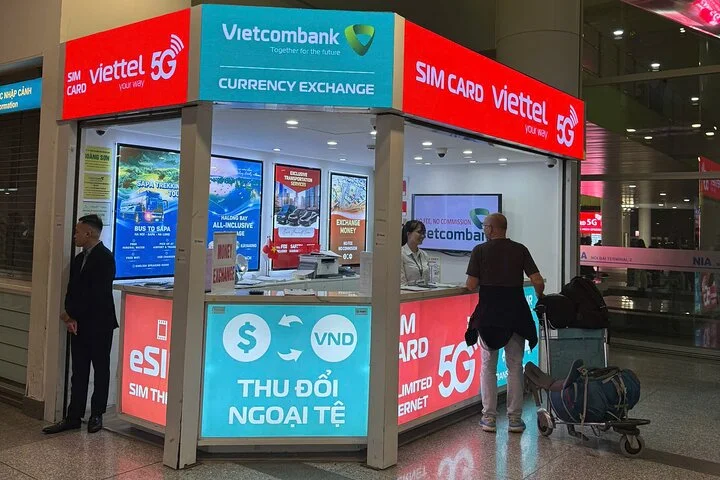
Vietnam SIM Card & Internet Guide 2026: Complete Connectivity Handbook for Travelers
Staying connected during your Vietnam trip is essential for navigation, communication, booking services, and sharing your experiences. Vietnam offers excellent mobile connectivity with three major providers (Viettel, Vinaphone, Mobifone) offering affordable data plans, widespread 4G coverage, and expanding 5G networks. Tourist SIM cards are readily available at airports, convenience stores, and mobile shops, with unlimited data plans starting from just $3-5 USD. This comprehensive guide covers everything you need to know about purchasing SIM cards, choosing the right data plan, understanding eSIM options, finding WiFi, and staying connected throughout Vietnam in 2026.

Vietnam Visa Overstay: New Fines & Penalties (Decree 282/2025)
Vietnam doubled its maximum visa overstay fine to VND 40 million (~$1,520) under Decree 282/2025, effective December 15, 2025. The new rules introduce 7 escalating fine brackets, allow deportation from just 16 days of overstay, and carry long-term consequences including blacklisting and entry bans. This guide breaks down the full fine schedule, explains what to do if you have already overstayed, and shows you how to prevent it.
Table of Contents
- Understanding the Vietnam E-Visa Review Process
- How Applications Are Reviewed
- What Happens When Your Application Is Reviewed
- Top 12 Reasons for Vietnam E-Visa Rejection (And How to Avoid Them)
- 1. Passport Validity Under 6 Months (Very Common) ⚠️
- 2. Poor Quality Passport Photos (Most Common) 📸
- 3. Unclear or Poor Quality Passport Bio-Page Scan 🔍
- 4. Name Mismatch or Spelling Errors (Very Common) ✍️
- 5. Incorrect or Incomplete Personal Information ℹ️
- 6. Previous Immigration Violations (Rare but Serious) 🚫
- 7. Invalid Entry or Exit Dates 📅
- 8. Wrong Entry Point Selected 🛂
- 9. Passport Missing Required Blank Pages 📖
- 10. Application Submitted Too Close to Travel Date ⏰
- 11. Payment Issues or Failed Transactions (Rare) 💳
- 12. Inconsistent or Suspected Fraudulent Information (Very Rare) 🔍
- Step 1: Read the Rejection Email Carefully
- Step 2: Identify and Fix the Specific Issue
- Step 3: Reapply Immediately
- Step 4: Consider Priority Processing for Reapplication
- Step 5: Contact Support If Needed
- Special Cases Requiring Embassy Contact
- Pre-Application Prevention Checklist: Avoid Rejection Before It Happens
- ✅ Complete Pre-Application Checklist
- Why Use Our Vietnam E-Visa Service to Avoid Rejection
- Application Review Before Submission
- Photo and Document Verification
- Error Detection and Correction
- High Approval Rate Success
- Expert Support Throughout the Process
- Resubmission Assistance If Needed
- Multiple Processing Speed Options
- Ready to Apply with Confidence?
- Frequently Asked Questions About Vietnam Visa Rejection
- Can I reapply immediately after a rejection?
- How long does reapplication take?
- Will a rejection affect my future applications?
- What's the most common reason for rejection?
- Can I appeal a visa rejection decision?
- Do I need to contact the Vietnamese embassy if rejected?
- What if I already booked flights and my visa is rejected?
- How can I check if my passport has 6 months validity?
- Conclusion: Avoid Rejection and Travel with Confidence
- Ready to Apply? Let Us Help You Avoid Rejection