Vietnam E-Visa for US Citizens 2026: Complete Guide

Vietnam recorded nearly 530,000 arrivals from the United States in the first half of 2026, according to Vietnam's National Statistics Office. That put the US among the country's top five source markets, behind China, South Korea, Russia, and Taiwan. It is easy to see the appeal: Vietnam offers some of the best food, landscapes, and value for money anywhere in Southeast Asia.
But every single one of those travelers needed a visa before arriving.
Unlike citizens of Japan, South Korea, or most of Western Europe, Americans are not on Vietnam's visa exemption list. If you hold a US passport and want to visit Vietnam in 2026, you need to arrange a visa before your trip. This guide covers everything you need to know — from which visa to choose, to how to apply, to what to expect when you land.
Do Americans Need a Visa for Vietnam?
Yes. US citizens require a valid visa to enter Vietnam for any purpose — tourism, business, visiting family, or transit. There is no visa-free entry for American passport holders on the Vietnamese mainland, regardless of how short your stay is.
This catches some travelers off guard, especially those coming from countries in Southeast Asia or Europe where Americans can enter visa-free. Vietnam is different. If you show up at a Vietnamese immigration counter or airline check-in desk without a valid visa, you will be denied boarding or turned away at the border.
The only exception is Phu Quoc Island, which has a separate visa-free policy covered below.
What about dual citizens?
If you hold both a US passport and a passport from a visa-exempt country (for example, a French or Japanese passport), you can enter Vietnam visa-free using the exempt passport. However, the passport you use to enter Vietnam must be the same one you used during your entire trip — at airline check-in, at transit points, and at Vietnamese immigration. You cannot mix passports between check-in and arrival.
If you plan to enter on your US passport specifically, you need a visa regardless of any other citizenship you hold.
The Phu Quoc Island Exception
Phu Quoc is the one place in Vietnam where US citizens can enter without a visa. Under Vietnam's special economic zone policy, all foreign nationals — including Americans — may stay on Phu Quoc for up to 30 days without a visa, provided they meet these conditions:
- Island-only stay: You must remain on Phu Quoc for the entire visit. You cannot travel to Ho Chi Minh City, Hanoi, Da Nang, or any other mainland destination under this exemption.
- Direct arrival: You must arrive at Phu Quoc International Airport (PQC) on an international flight or via sea. If your routing requires you to clear immigration at a mainland airport (for example, collecting baggage and re-checking in at Tan Son Nhat), you need a standard visa.
- Proof of departure: Immigration officers may ask for a return flight or onward ticket showing you will leave Phu Quoc within 30 days.
- Passport validity: Your US passport must be valid for at least 6 months from your arrival date.
Since June 1, 2026: Phu Quoc International Airport has been part of Vietnam's Pre-Arrival Information (PAI) system. Foreign travelers arriving at Phu Quoc should complete the free online declaration at prearrival.immigration.gov.vn no more than three days before arrival and save the QR code. If you are using the island's visa-free policy, select "Phu Quoc Visa Exemption" as your entry policy on the form. The declaration is separate from the E-Visa. It collects your travel information and is not a visa application.
The practical takeaway: If your trip is limited to Phu Quoc and under 30 days, you do not need a visa. If you plan to visit any other part of Vietnam — even for a single day trip — apply for an E-Visa that covers your entire itinerary.
Which Visa Should US Citizens Choose?
American travelers have two main visa options for Vietnam in 2026. Here is how they compare:
| Feature | E-Visa | Embassy/Consulate Visa |
|---|---|---|
| Application method | Fully online | Through the embassy or a consulate |
| Processing time | About 3 working days (standard) | Varies by mission and visa type |
| Maximum stay | 90 days | Depends on the visa category |
| Entry types | Single or multiple | Single or multiple |
| Entry points accepted | All 83 international checkpoints | All entry points |
| Best for | Most tourists and business travelers | Long-term stays, work visas, special categories |
The E-Visa is the right choice for most US travelers
The E-Visa covers stays up to 90 days, is accepted at every international checkpoint in Vietnam (airports, land borders, and seaports), and requires no embassy visit, no mailing your passport, and no paperwork at the airport. You apply online, receive a PDF by email, print it, and present it at immigration. One payment, no surprises.
Since August 2023, the E-Visa has been open to citizens of every country, including the United States. Both single-entry and multiple-entry options are available. For a two-week vacation or a month-long trip through Vietnam, the E-Visa is the simplest path.
When to consider an embassy visa instead
The embassy visa (sticker visa) is the better option if you need to stay longer than 90 days, require a work visa with a sponsoring employer, or need a specific visa category that the E-Visa does not cover. Vietnam's embassy and consulates in the United States include:
- Embassy of Vietnam — 1233 20th Street NW, Suite 400, Washington, DC 20036
- Consulate General, Houston — 5251 Westheimer Road, Suite 1100, Houston, TX 77056
- Consulate General, San Francisco — 1700 California Street, Suite 580, San Francisco, CA 94109
- Consulate, New York — 866 United Nations Plaza, Suite 435, New York, NY 10017
Processing times, submission methods, and counter hours vary by location and visa type, so check directly with the mission that serves your state before you apply. For most tourist and short-term business trips, the E-Visa is faster and less hassle. For a side-by-side look at all the routes, see our guide to E-Visa vs embassy visa vs visa exemption.
Traveling at short notice
If your trip is only days away, you do not need to switch to a different kind of visa. Apply for the E-Visa with E-Visa Priority Handling, which offers 2-day, 1-day, and 4-hour urgent options. Check current pricing on the booking page.
E-Visa Requirements for US Citizens
Before you start the application, gather these documents:
1. Valid US passport
Your passport must be valid for at least 6 months beyond your planned entry date into Vietnam, with a minimum of 2 blank visa pages. This is strictly enforced — there are reports of travelers being denied boarding with passports that had 5 months and 25 days remaining. If your passport is close to the cutoff, renew it before applying.
As of October 2026, the US State Department lists routine passport processing at 4-6 weeks and expedited processing at 2-3 weeks, not counting mailing time. Factor this into your travel timeline.
2. Passport bio page scan
A clear, color scan or photo of your passport's data page — the page with your photo, name, passport number, and the machine-readable zone at the bottom. The entire page must be visible with no shadows, glare, or cut-off corners.
Tip: Place your passport on a dark, flat surface and photograph it from directly above in good lighting. A phone camera works fine if the image is sharp and all text is legible.
3. Portrait photo
This is where many American applicants run into trouble. The Vietnam E-Visa photo requirements are different from US passport photo specs:
| Specification | Vietnam E-Visa Photo | US Passport Photo |
|---|---|---|
| Size | 4 cm x 6 cm (1.6" x 2.4") | 2 in x 2 in (5.1 cm x 5.1 cm) |
| Background | White only | White or off-white |
| Face proportion | 70-80% of frame | 50-69% of frame |
| Glasses | Not allowed | Not allowed |
| Format | JPG or PNG, under 2 MB | Printed |
You cannot use your existing US passport photo — it is the wrong size and aspect ratio. You need a separate 4x6 cm photo with a pure white background, taken within the last 6 months.
Options for getting the right photo:
- DIY: Stand against a white wall in bright, even lighting. Have someone photograph you with a smartphone from chest level. Crop to 4x6 cm ratio (2:3 aspect ratio). Make sure your face fills 70-80% of the frame.
- Photo studio: Many photo studios and drugstore photo counters can produce a 4x6 cm photo if you specify the dimensions. Call ahead to confirm they can do non-US sizes.
- Online tool: Several free tools let you crop and resize a photo to the exact specification. Just make sure the background is pure white, not cream or off-white.
4. Travel details
You will need to provide:
- Planned entry date — the date you expect to arrive in Vietnam
- Entry port — the specific airport, land border, or seaport where you will enter (you must enter through this exact checkpoint)
- Exit port — where you plan to leave Vietnam
- Accommodation address — your hotel name and address for the first night (does not need to be your entire itinerary; a hotel name and city is sufficient)
- Purpose of visit — select "Tourism" for vacation travel or "Business" for work-related trips
5. Payment method
An international credit or debit card (Visa, Mastercard, or American Express) to pay the application fee online.
How to Apply: Step by Step
The application takes about 15-20 minutes if you have all your documents ready.
Step 1: Start your application
Begin your E-Visa application on our Vietnam E-Visa page. You will select your visa type and processing speed before entering your personal details.
Step 2: Choose your visa type
Select between:
- Single-entry — one entry into Vietnam, valid for up to 90 days
- Multiple-entry — unlimited entries during the 90-day validity period
If you plan to make side trips to Cambodia, Laos, or Thailand and return to Vietnam, choose multiple-entry. If this is a single visit without leaving and re-entering Vietnam, single-entry is sufficient.
Step 3: Select processing speed
Standard processing takes approximately 3 working days (Monday through Friday, excluding Vietnamese public holidays). If you need your visa faster, E-Visa Priority Handling offers expedited tiers:
- 2 working days — for moderately urgent applications
- 1 working day — when you need results quickly
- 4-hour urgent — for last-minute travel
Choose your speed based on your departure date. If you have 2+ weeks, standard processing is fine. If your trip is within the next week, consider a faster tier.
Step 4: Fill in your personal details
Enter your information exactly as it appears on your passport. This is critical — any mismatch between your application and your passport can result in rejection or delays.
US-specific warning about dates: Vietnam uses the DD/MM/YYYY date format. Many American applicants accidentally enter dates in the US format (MM/DD/YYYY). For example, if your birthday is March 5, 1990, you should enter 05/03/1990, not 03/05/1990. Double-check every date field before submitting.
Other fields to verify:
- Full name: Include all middle names exactly as printed in your passport. If your passport says "John David Smith," do not enter "John D. Smith" or "John Smith."
- Passport number: Enter with no spaces or dashes. Copy it directly from your passport if possible.
- Nationality: Select "United States" (not "USA" or "American").
Step 5: Upload your documents
Upload your passport bio page scan and your 4x6 cm portrait photo. Both files must be clear, in color, and in JPG or PNG format under 2 MB each. Review both uploads before proceeding — blurry or poorly cropped images are the number one cause of rejection.
Step 6: Pay and submit
Pay the application fee with your credit or debit card. After payment, you will receive a confirmation with an application tracking code. Save this code — you will need it to check your visa status.
Step 7: Receive and print your E-Visa
Once approved, your E-Visa arrives as a PDF file sent to the email address you provided. Print at least two copies — one for the immigration counter and one as a backup. While some airports in Vietnam have moved toward digital scanning, not all immigration counters accept a screen display. A printed copy ensures no issues at the border.
Verify that all details on the approved E-Visa match your passport before traveling. If you spot an error, contact us immediately to request a correction before your departure.
Processing Time: When to Apply
Standard timeline
The standard E-Visa processing time is 3 working days from the date a complete application with payment is received. Working days are Monday through Friday, excluding Vietnamese public holidays.
In practice, this means:
- Submit on Monday morning → expect approval by Wednesday or Thursday
- Submit on Thursday → expect approval by the following Monday or Tuesday (weekends do not count)
- Submit during Vietnamese public holidays → processing begins on the next working day
Holiday and peak season delays
Processing can stretch to 5-7 working days during peak periods. The dates that most affect US travelers:
- Tet (Vietnamese Lunar New Year): Late January to early February. Processing can halt for an entire week. If you are traveling to Vietnam for Tet celebrations, apply at least 3 weeks in advance.
- Vietnamese National Day: September 2. Processing pauses for 1-2 days.
- Summer travel season: June through August is a busy travel period, so leave a little extra buffer.
- US holiday travel: Thanksgiving (late November) and Christmas/New Year (late December) coincide with peak booking periods. Processing itself is not affected by US holidays, but if you wait until the last minute before a holiday trip, you may be cutting it close.
Our recommendation
Apply at least 2 weeks before your departure date if using standard processing. This gives you a comfortable buffer for any delays and time to correct issues if your application is returned for revision.
If you are within 10 days of departure, select a faster processing tier. If you are within 3 days, choose our urgent 4-hour or 1-day processing.
Where Can You Enter Vietnam with an E-Visa?
As of December 2025 (Resolution 389/NQ-CP), Vietnam accepts E-Visa entry at 83 international checkpoints: 17 airports, 27 land border crossings, and 39 seaports. This is a major expansion from the original 42 checkpoints in 2023.
For most American travelers, the relevant airports are:
| Airport | City | IATA Code | Notes |
|---|---|---|---|
| Tan Son Nhat | Ho Chi Minh City | SGN | Vietnam's busiest airport; only airport with a direct US flight |
| Noi Bai | Hanoi | HAN | Main gateway for northern Vietnam and Ha Long Bay |
| Da Nang | Da Nang | DAD | Central Vietnam hub for Hoi An, Hue, and the coast |
| Cam Ranh | Nha Trang | CXR | Beach resort gateway |
| Phu Quoc | Phu Quoc Island | PQC | Island destination (also covered by visa-free entry) |
| Phu Bai | Hue | HUI | Imperial city, closer than Da Nang for some itineraries |
| Cat Bi | Hai Phong | HPH | Alternative gateway for Ha Long Bay |
The E-Visa also works at all major land borders — useful if you are combining Vietnam with overland travel through Cambodia (Moc Bai, Xa Mat, Bavet crossings), Laos (Lao Bao, Cau Treo, Na Meo crossings), or China (Huu Nghi, Lao Cai, Mong Cai crossings).
Important: Your E-Visa lists a specific entry port. You must enter Vietnam through the checkpoint listed on your approved E-Visa. If your travel plans change after approval and you arrive at a different airport or border crossing, you may be denied entry. If your plans change, apply for a new E-Visa with the correct entry port before traveling.
Getting to Vietnam from the United States
Direct flights
As of late 2026, there is one nonstop route from the US to Vietnam:
Vietnam Airlines: San Francisco (SFO) → Ho Chi Minh City (SGN)
- Flight time: approximately 15 hours 40 minutes
- Frequency: 3-4 flights per week, depending on the season
- Fares: vary widely by season and are highest around Tet, so compare prices early
This is the only nonstop option. Travelers from New York, Los Angeles, Chicago, Seattle, and other US cities connect through an Asian hub. For more on routes and booking, see our flights to Vietnam guide.
Common connecting routes
Most US travelers connect through an Asian hub. The most popular routing options:
| Hub City | Common Airlines | Connection Time | Total Travel Time |
|---|---|---|---|
| Seoul (ICN) | Korean Air, Asiana | 2-4 hours | 18-22 hours |
| Tokyo (NRT/HND) | ANA, Japan Airlines | 2-4 hours | 18-22 hours |
| Taipei (TPE) | EVA Air, China Airlines | 2-3 hours | 19-23 hours |
| Hong Kong (HKG) | Cathay Pacific | 2-4 hours | 19-22 hours |
| Bangkok (BKK) | Thai Airways, various | 1-3 hours | 20-24 hours |
| Singapore (SIN) | Singapore Airlines | 2-4 hours | 22-26 hours |
Transit note: Most travelers connecting through these hubs stay airside and do not pass through immigration. If your connection involves self-transfer, separate tickets, or a long layover where you want to leave the airport, check that hub's entry rules for US citizens before booking. Some countries require an online arrival card or travel authorization even for visa-free visitors, and policies change.
Common Mistakes US Applicants Make
We cover the full list of E-Visa mistakes that lead to rejection in our detailed guide. Here are the issues that specifically affect American applicants:
1. Using the wrong date format
The US is one of the few countries that uses MM/DD/YYYY. Vietnam uses DD/MM/YYYY. Entering your birth date as 07/04/1990 (July 4) when the system expects 04/07/1990 will cause a mismatch with your passport data. Check every date field twice.
2. Submitting a US passport photo instead of the required 4x6 cm photo
US passport photos are 2x2 inches (5.1 x 5.1 cm) — square format. The Vietnam E-Visa requires a 4x6 cm (1.6 x 2.4 inch) photo — rectangular, portrait orientation, with your face filling 70-80% of the frame. Submitting the wrong size or aspect ratio is a common rejection reason.
3. Leaving out middle names
US passports typically include full middle names. The E-Visa application requires your name to match your passport exactly. If your passport reads "Sarah Elizabeth Johnson," entering "Sarah Johnson" or "Sarah E. Johnson" can trigger rejection. Type every name as printed.
4. Applying too late for holiday travel
American travelers often book flights for Thanksgiving, Christmas, or spring break and then apply for their visa a few days before departure. Standard processing is 3 working days, but delays happen — especially when your application coincides with Vietnamese holidays. Apply at least 2 weeks before any holiday trip.
5. Passport expiring within 6 months
US passport renewal takes 4-6 weeks for routine processing, plus mailing time. If your passport expires within 6 months of your planned Vietnam entry date, start the renewal process immediately. You cannot apply for a Vietnam E-Visa with an expiring passport, and even if you somehow receive an E-Visa, immigration officers in Vietnam will deny entry.
What to Do After You Arrive
Complete the Digital Arrival Card
Foreign travelers flying into Vietnam are now expected to complete a free Digital Arrival Card before clearing immigration. This online form is officially called the Pre-Arrival Information (PAI) system, and it replaced the old paper arrival slip. You submit your details at prearrival.immigration.gov.vn no more than three days before you arrive (or on arrival), receive a QR code, and present it at the immigration counter along with your passport and printed E-Visa.
By late June 2026, PAI was live at Tan Son Nhat (SGN), Noi Bai (HAN), Da Nang (DAD), Cam Ranh (CXR), and Phu Quoc (PQC). In a June 17, 2026 notice, the US Embassy in Hanoi said the mandatory declaration is being extended to all airports in Vietnam. Complete it before your flight so you are not filling in a form in the arrivals hall.
At the immigration counter
With an E-Visa, you go straight to the regular immigration counter — there is no separate visa counter or additional queue. Have these ready:
- Your printed E-Visa PDF
- Your US passport
- Your Digital Arrival Card QR code (on phone or printed)
The immigration officer scans your documents, stamps your passport with an entry date, and you are through. The process typically takes 2-5 minutes per person during normal hours.
Skip the queue with fast track
If you want to skip the immigration line entirely — especially useful after a 16+ hour journey from the US — consider adding airport fast track service to your booking. A representative meets you at the gate or jet bridge and escorts you through a priority immigration lane. This is available at Tan Son Nhat (SGN), Noi Bai (HAN), and Da Nang (DAD).
For a detailed breakdown of how fast track works and whether it is worth the cost, see our honest review of Vietnam airport fast track.
Frequently Asked Questions
Can I extend my E-Visa once I am in Vietnam?
Do not count on it. Extensions are not a routine option for tourists, and the rules and procedures can change. The safest approach is to choose the right length and entry type before you apply: if there is any chance your trip will run long, pick a validity period that covers your latest possible departure date (up to 90 days). Never stay past the date on your visa. Vietnam increased its overstay fines under Decree 282/2025, as explained in our overstay fines guide.
Do I need a return ticket to enter Vietnam?
Vietnamese immigration does not systematically require proof of onward travel. However, airlines frequently do. Many carriers will not let you board without a return or onward flight booked within your visa validity period. Have a confirmed departure flight or be prepared to purchase a flexible onward ticket at check-in.
Can I enter Vietnam by land from Cambodia or Laos with an E-Visa?
Yes. The E-Visa is accepted at all 27 international land border crossings as of December 2025. Popular crossings for US travelers include Moc Bai (Cambodia to Ho Chi Minh City), Lao Bao (Laos to Hue/central Vietnam), and Huu Nghi (China to Hanoi region). Make sure the border crossing listed on your E-Visa matches the one you plan to use.
What if my E-Visa application is rejected?
Rejections are almost always caused by photo quality issues, name mismatches, or unclear passport scans. Fix the issue and reapply with corrected documents. If you applied through our service, contact our support team and we will help you work out what went wrong. Our visa rejection reasons guide covers the most common causes.
Is Vietnam safe for American travelers?
Vietnam is generally considered safe for US tourists. As of October 2026, the US State Department rates Vietnam at Level 1 ("Exercise Normal Precautions"), its lowest advisory level. Common-sense precautions for petty theft, traffic safety, and food hygiene apply, but violent crime against tourists is rare.
The Bottom Line
US citizens need a visa for Vietnam — there is no way around it for mainland travel. The E-Visa is the fastest, most affordable, and most practical option for the vast majority of American travelers. It covers stays up to 90 days, works at all 83 international checkpoints (air, land, and sea), requires no embassy visit, and involves a single online payment with no additional fees at the airport.
Apply at least 2 weeks before your trip. Double-check your dates (DD/MM/YYYY, not MM/DD/YYYY), get a proper 4x6 cm photo (not your US passport photo), and match your name exactly to your passport.
Share:
Created: Oct 24, 2026 | Modified: Oct 24, 2026
Related Posts
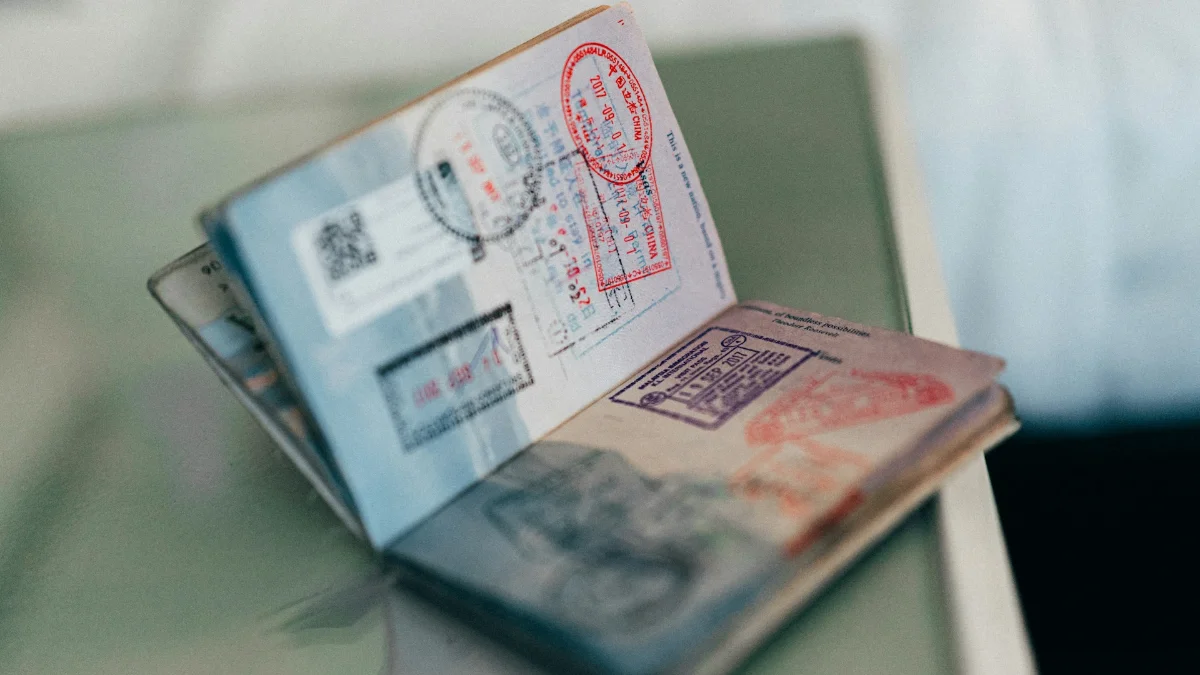
Vietnam E-Visa vs Embassy Visa vs Visa Exemption: Which Do You Need?
Do you need a visa for Vietnam at all? It depends on your passport, how long you plan to stay, and why you are going. This guide compares Vietnam's three main options, which are visa-free entry, the E-Visa, and an embassy visa. It explains the 45-day exemption rules under Resolutions 44 and 229 and Phu Quoc's 30-day island policy, then walks you through a simple decision flowchart so you can pick the right route before you book.

Vietnam Visa for UK Citizens 2026: Everything You Need to Know
Holders of a full British citizen passport can visit Vietnam visa-free for up to 45 days under Resolution 44/NQ-CP, which runs until 14 March 2028. But the exemption has limits. It does not cover BN(O) passports, it cannot simply be stretched past 45 days, and it does not suit every itinerary. This guide explains the conditions, how the days are counted, when British travellers are better off with an E-Visa, how to apply, flights from the UK and what to expect on arrival.
Vietnam E-Visa for Indian Citizens 2026: Requirements & Tips
Indian passport holders need a visa to visit mainland Vietnam, and the E-Visa is the simplest way to get one. It allows stays of up to 90 days with single or multiple entry and is applied for entirely online. This guide covers the documents and photo specs you need, realistic processing times around Diwali, summer and December travel peaks, the current nonstop flights from India, the Phu Quoc visa-free option, common rejection causes and what to expect on arrival.
Table of Contents
- Do Americans Need a Visa for Vietnam?
- What about dual citizens?
- The Phu Quoc Island Exception
- Which Visa Should US Citizens Choose?
- The E-Visa is the right choice for most US travelers
- When to consider an embassy visa instead
- Traveling at short notice
- E-Visa Requirements for US Citizens
- 1. Valid US passport
- 2. Passport bio page scan
- 3. Portrait photo
- 4. Travel details
- 5. Payment method
- How to Apply: Step by Step
- Step 1: Start your application
- Step 2: Choose your visa type
- Step 3: Select processing speed
- Step 4: Fill in your personal details
- Step 5: Upload your documents
- Step 6: Pay and submit
- Step 7: Receive and print your E-Visa
- Processing Time: When to Apply
- Standard timeline
- Holiday and peak season delays
- Our recommendation
- Where Can You Enter Vietnam with an E-Visa?
- Getting to Vietnam from the United States
- Direct flights
- Common connecting routes
- Common Mistakes US Applicants Make
- 1. Using the wrong date format
- 2. Submitting a US passport photo instead of the required 4x6 cm photo
- 3. Leaving out middle names
- 4. Applying too late for holiday travel
- 5. Passport expiring within 6 months
- What to Do After You Arrive
- Complete the Digital Arrival Card
- At the immigration counter
- Skip the queue with fast track
- Frequently Asked Questions
- Can I extend my E-Visa once I am in Vietnam?
- Do I need a return ticket to enter Vietnam?
- Can I enter Vietnam by land from Cambodia or Laos with an E-Visa?
- What if my E-Visa application is rejected?
- Is Vietnam safe for American travelers?
- The Bottom Line