Vietnam Digital Arrival Card 2026: Complete Guide

Since April 15, 2026, Vietnam requires most foreign travelers to complete a Digital Arrival Card before clearing immigration. The free online system, officially called Pre-Arrival Information (PAI), has already expanded from one airport to five and is expected to go nationwide. If you skip it, you will face long delays at the immigration counter.
This guide covers everything you need to know: what the Digital Arrival Card is, which airports require it, how to fill it out step by step, and mistakes that could slow you down at the border.
What Is the Vietnam Digital Arrival Card?
The Vietnam Digital Arrival Card is a mandatory online declaration introduced by the Immigration Department under Vietnam's Ministry of Public Security. It replaces the paper arrival slip (also known as the NA1 disembarkation card) that was previously handed out on aircraft before landing.
The system collects your passport details, visa information, flight number, and accommodation address before you arrive. Once you submit the form, it generates a QR code that you save on your phone or print out. At the immigration counter, officers scan this code instead of processing a paper card, which speeds up the entire entry procedure.
Key facts about the Digital Arrival Card:
- Official name: Pre-Arrival Information (PAI) system
- Launch date: April 15, 2026 (pilot at Tan Son Nhat Airport, Ho Chi Minh City)
- Cost: Completely free
- Submission window: Within 72 hours (3 days) before your arrival
- Official portal: prearrival.immigration.gov.vn
- What you receive: A QR code to present at immigration
Important: The Digital Arrival Card is not a visa. It does not grant you permission to enter Vietnam. You still need a valid E-Visa, paper visa, or visa exemption depending on your nationality.
Which Airports Require the Digital Arrival Card?
The PAI system launched at one airport and has been expanding rapidly. As of July 2026, five international airports require the Digital Arrival Card:
| Airport | Code | City | Mandatory Since |
|---|---|---|---|
| Tan Son Nhat International Airport | SGN | Ho Chi Minh City | April 15, 2026 |
| Phu Quoc International Airport | PQC | Phu Quoc | June 1, 2026 |
| Noi Bai International Airport | HAN | Hanoi | June 8, 2026 |
| Da Nang International Airport | DAD | Da Nang | June 15, 2026 |
| Cam Ranh International Airport | CXR | Nha Trang | June 2026 |
Airports not yet covered
Travelers arriving at other Vietnamese airports, such as Cat Bi (HPH) in Hai Phong, are currently exempt from the Digital Arrival Card requirement. However, the Immigration Department has confirmed plans to roll out the system nationwide, and the rapid pace of expansion (five airports in under three months) suggests remaining entry points will be added soon. Always check the official portal before your flight to confirm whether your arrival airport is covered.
The system also includes form fields for land and sea entry points, which indicates it will eventually apply to land border crossings as well.
Who Needs to Fill Out the Digital Arrival Card?
The requirement applies broadly. If you are a foreign national arriving at one of the five covered airports, you almost certainly need to complete it.
Required for:
- Foreign tourists on an E-Visa or paper visa
- Travelers from visa-exempt countries (UK, Japan, South Korea, Germany, France, and others)
- Business travelers and workers entering on any visa type
- Overseas Vietnamese entering on a foreign passport with a valid visa
- Travelers entering Phu Quoc under the island's local visa exemption policy
- Transit passengers who pass through Vietnamese immigration
Exempt:
- Vietnamese citizens traveling on a Vietnamese passport
- Airside transit passengers who do not pass through immigration (confirm with your airline)
Being exempt from a visa does not exempt you from the Digital Arrival Card. Even if your nationality allows visa-free entry to Vietnam, you must still complete the declaration at covered airports.
How to Fill Out the Digital Arrival Card: Step by Step
The entire process takes about 10 minutes. Complete it before you leave for the airport, while you have reliable internet access. Do not wait until you land.
Step 1: Access the official portal
Go to prearrival.immigration.gov.vn on your computer, tablet, or smartphone. You can also scan the QR code provided by the Immigration Department at airline check-in counters or departure gates.
Warning: Several fake websites have been detected impersonating the PAI system. These sites charge fees and may attempt to steal credit card information. The official portal is completely free. If any site asks you to pay for the declaration, close it immediately.
Step 2: Select your language
The portal supports multiple languages, including English, Vietnamese, Chinese, and French. Choose your preferred language from the options at the top of the page.
Step 3: Start your declaration
Click "Create and Submit Pre-arrival Information" and enter the CAPTCHA verification code to proceed.
Step 4: Enter your personal details
Fill in the following information exactly as it appears in your passport:
- Full name (first name and surname, matching your passport)
- Date of birth
- Gender
- Nationality
- Passport number
- Passport expiry date
Double-check your passport number carefully. Mixing up the letter O with the number 0, or the letter I with the number 1, is the single most common mistake travelers make on this form.
Step 5: Enter your visa details
Select the type of entry document you hold:
- E-Visa (enter your E-Visa number and validity dates)
- Visa exemption (select the applicable exemption policy)
- Phu Quoc visa exemption (if entering through Phu Quoc under the island's local exemption)
- Temporary residence card
- Other visa types
Step 6: Add your flight and accommodation details
Provide your:
- Arrival flight number (use the operating carrier's flight number, not a codeshare number)
- Arrival date
- Border gate (select from the dropdown: SGN, HAN, DAD, PQC, or CXR)
- Purpose of travel
- Full accommodation address in Vietnam (hotel name, street, ward, district, and city)
The accommodation field uses a hierarchical dropdown system: Province, then District, then Ward, then Street. You need to know your hotel's ward (Phuong) to complete this correctly. If you are unsure, search for your hotel on Google Maps. The full address usually includes the ward name or number.
If your specific hotel does not appear in the dropdown, select the nearest listed hotel or landmark within the same ward. Immigration officers understand the database is still being updated and will not deny entry over a minor address difference.
Step 7: Review, submit, and save your QR code
Review all your information carefully, then submit the form. The system will generate a QR code and send a confirmation to your email address.
Save this QR code immediately:
- Take a screenshot and save it to your phone's photo gallery
- Save a PDF backup
- Optionally print a paper copy
Do not rely on having internet access at the airport to retrieve your QR code. Mobile signal inside the terminal can be unreliable.
What You Need at the Airport
When you reach the immigration counter, have the following ready:
- Your QR code from the Digital Arrival Card (screenshot, PDF, or printed copy)
- Your passport (the same one you entered on the form)
- Your E-Visa, paper visa, or visa exemption eligibility document (if applicable)
- Return or onward ticket (officers may request this)
The immigration officer scans your QR code, verifies it against your passport, and processes your entry. With a valid QR code, the process is noticeably faster than the old paper system.
Connecting flights
If you are connecting from an international flight to a domestic flight within Vietnam (for example, flying into SGN and then continuing to Da Lat), you only need to submit one Digital Arrival Card for your initial international entry point. No separate declaration is needed for the domestic leg.
Group travel
For families and tour groups, you can submit one declaration covering multiple travelers through a single form submission.
Common Mistakes to Avoid
The PAI system is new, and many travelers run into avoidable problems. Here are the most common mistakes and how to prevent them:
1. Passport number typos
The most frequent cause of problems at the immigration counter. Double-check for O versus 0 (letter vs number) and I versus 1. Your passport number must match your physical passport exactly.
2. Using the wrong email address
The system sends an OTP (one-time password) to your email for verification. If you enter an email you cannot access, you will not be able to complete the submission. Use an email you can check immediately.
3. Submitting outside the 72-hour window
The portal only accepts declarations for arrival dates within 72 hours (3 days). If you try to submit earlier, the system will reject it. If your flight is rescheduled, you will need to submit a new declaration with the updated arrival date once it falls within the window.
4. Vague accommodation address
Entering just a city name is not enough. You must provide the full hotel address, including the ward and district. Use Google Maps to find your hotel's exact ward if you are unsure.
5. Not saving the QR code offline
Airport Wi-Fi is unreliable. Save the QR code as a screenshot, a PDF, or both before you leave your hotel. Officers will ask for it at the counter, and you cannot count on downloading it at the terminal.
6. Using unofficial websites that charge fees
The official Digital Arrival Card is free. Any website that charges you money for the declaration is a third-party reseller or a scam. Only use the official portal at prearrival.immigration.gov.vn.
7. Special characters in the address field
Avoid using symbols like #, /, or commas in the street address field. These can cause the form to fail validation and trigger a generic error message. Type the address in plain text.
8. Session timeout
If you leave the form open for more than 15 minutes without submitting, the security token may expire. This can cause a confusing error message when you try to submit. If this happens, open a fresh browser window (incognito/private mode works best) and start again.
Digital Arrival Card vs E-Visa: What Is the Difference?
This is a common point of confusion. The Digital Arrival Card and the E-Visa are two completely separate requirements. One does not replace the other.
| Digital Arrival Card | E-Visa | |
|---|---|---|
| Purpose | Immigration declaration (travel information) | Entry permission (visa) |
| Cost | Free | Paid |
| When to submit | Within 72 hours of arrival | Apply in advance (processing takes several business days) |
| Who needs it | All foreign nationals at covered airports | Depends on your nationality and length of stay |
| What you receive | QR code | Electronic visa document |
| Replaces | The old paper arrival/disembarkation card | The need to visit an embassy for a visa |
If your nationality requires a visa to enter Vietnam, you need both an E-Visa (or other valid visa) and a Digital Arrival Card. If your nationality is visa-exempt, you still need the Digital Arrival Card at covered airports.
Frequently Asked Questions
Is the Vietnam Digital Arrival Card free?
Yes. The official form is completely free on the government portal. Any site that charges a fee is not the official system. Only use prearrival.immigration.gov.vn.
Can I fill out the form at the airport?
Technically yes. QR codes linking to the portal are displayed in the arrivals area at covered airports. However, filling it out after landing adds significant time to your immigration process, especially during peak hours when queues can stretch to 30-60 minutes or longer. Complete the form before your flight.
What if I lose my QR code?
You can either resubmit a new declaration on the portal (which generates a new QR code) or ask immigration officers to look up your record. However, manual lookups take longer. Always keep a backup.
What if I made a mistake on the form?
If you entered incorrect information (such as a wrong passport number), you must submit a new declaration. The system will use the most recent submission. You cannot edit a previously submitted form.
Does the Digital Arrival Card apply to visa-exempt travelers?
Yes. Being exempt from a visa does not exempt you from the Digital Arrival Card. All foreign nationals arriving at covered airports must complete it, regardless of visa status.
What about connecting domestic flights?
You only submit one declaration for your initial international arrival point. If you fly into Ho Chi Minh City (SGN) and then take a domestic flight to Hue, you only need the Digital Arrival Card for SGN.
What if my flight is delayed or rescheduled?
If your arrival date changes and falls outside the dates on your submitted declaration, you should submit a new form with the updated arrival date once it falls within the 72-hour window.
I got a "Passport Blacklist" error. Am I banned from Vietnam?
No. This is a misleading system error message caused by a validation problem, not an actual blacklist. Common triggers include address dropdown mismatches, special characters in the form fields, or an expired browser session. Clear your browser cache, open a private/incognito window, and try again without special characters.
What to Expect Going Forward
The Vietnamese government has confirmed that the PAI system will expand to all international airports and is studying deployment at land border crossings. Given the pace of the rollout so far (five airports in under three months), travelers arriving at any Vietnamese entry point should check the official portal before their trip to confirm whether their arrival location is covered.
The system saw strong early adoption. In its first 15 days at Tan Son Nhat Airport alone, over 161,000 declarations were submitted, with a participation rate of around 70% among foreign arrivals.
Vietnam's Digital Arrival Card is part of a broader push toward digital government services. It joins the E-Visa system and other online platforms as part of the country's ongoing modernization of immigration procedures.
The bottom line: budget 10 minutes before your trip to fill out the form, save your QR code offline, and you will breeze through immigration. Skip it, and you may be standing in a much longer queue while everyone else walks past.
Share:
Created: Jul 13, 2026 | Modified: Jul 13, 2026
Related Posts

Vietnam E-Visa Mistakes: 10 Errors That Get You Denied
Most Vietnam E-Visa rejections are not about eligibility. They are caused by preventable application errors: a bad photo, a passport number typo, or the wrong entry port. This guide breaks down the 10 most common mistakes that get E-Visa applications denied in 2026 and shows you exactly how to fix each one before you hit submit.

Vietnam Visa Overstay: New Fines & Penalties (Decree 282/2025)
Vietnam doubled its maximum visa overstay fine to VND 40 million (~$1,520) under Decree 282/2025, effective December 15, 2025. The new rules introduce 7 escalating fine brackets, allow deportation from just 16 days of overstay, and carry long-term consequences including blacklisting and entry bans. This guide breaks down the full fine schedule, explains what to do if you have already overstayed, and shows you how to prevent it.
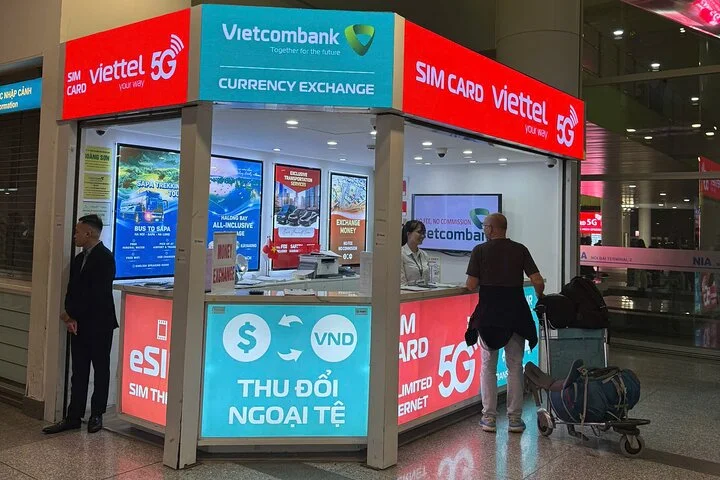
Vietnam SIM Card & Internet Guide 2026: Complete Connectivity Handbook for Travelers
Staying connected during your Vietnam trip is essential for navigation, communication, booking services, and sharing your experiences. Vietnam offers excellent mobile connectivity with three major providers (Viettel, Vinaphone, Mobifone) offering affordable data plans, widespread 4G coverage, and expanding 5G networks. Tourist SIM cards are readily available at airports, convenience stores, and mobile shops, with unlimited data plans starting from just $3-5 USD. This comprehensive guide covers everything you need to know about purchasing SIM cards, choosing the right data plan, understanding eSIM options, finding WiFi, and staying connected throughout Vietnam in 2026.
Table of Contents
- What Is the Vietnam Digital Arrival Card?
- Which Airports Require the Digital Arrival Card?
- Airports not yet covered
- Who Needs to Fill Out the Digital Arrival Card?
- Required for:
- Exempt:
- How to Fill Out the Digital Arrival Card: Step by Step
- Step 1: Access the official portal
- Step 2: Select your language
- Step 3: Start your declaration
- Step 4: Enter your personal details
- Step 5: Enter your visa details
- Step 6: Add your flight and accommodation details
- Step 7: Review, submit, and save your QR code
- What You Need at the Airport
- Connecting flights
- Group travel
- Common Mistakes to Avoid
- 1. Passport number typos
- 2. Using the wrong email address
- 3. Submitting outside the 72-hour window
- 4. Vague accommodation address
- 5. Not saving the QR code offline
- 6. Using unofficial websites that charge fees
- 7. Special characters in the address field
- 8. Session timeout
- Digital Arrival Card vs E-Visa: What Is the Difference?
- Frequently Asked Questions
- Is the Vietnam Digital Arrival Card free?
- Can I fill out the form at the airport?
- What if I lose my QR code?
- What if I made a mistake on the form?
- Does the Digital Arrival Card apply to visa-exempt travelers?
- What about connecting domestic flights?
- What if my flight is delayed or rescheduled?
- I got a "Passport Blacklist" error. Am I banned from Vietnam?
- What to Expect Going Forward