Vietnam E-Visa vs Embassy Visa vs Visa Exemption: Which Do You Need?
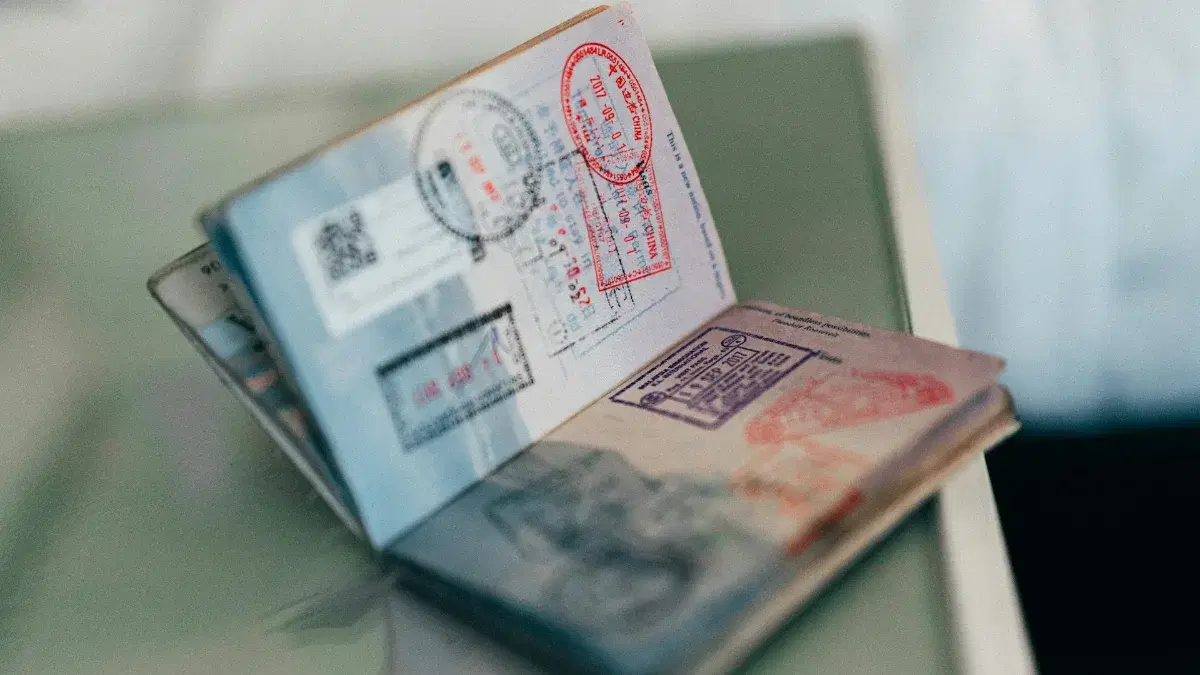
"Do I need a visa for Vietnam?" sounds like a yes-or-no question. In practice, the answer depends on three things: the passport you travel on, how long you plan to stay, and what you plan to do while you are there.
Most visitors end up using one of three routes into Vietnam. Some nationalities can enter visa-free for a limited stay. Everyone else, and anyone staying longer than their exemption allows, can apply online for an E-Visa, which has been open to citizens of all countries since August 15, 2023. A smaller group of travelers, mainly people moving to Vietnam to work, study, or stay long term, needs a visa issued through a Vietnamese embassy or consulate.
This guide explains how each option works, who it suits, and how to choose between them for trips from late 2026 into 2027.
The Quick Answer
If you want the bottom line first:
- Your country is on Vietnam's 45-day exemption list and your trip is shorter than 45 days: You probably do not need a visa. Check the exemption rules below, especially the purpose-of-travel condition for Resolution 229 countries.
- You are only visiting Phu Quoc, arriving directly, for up to 30 days: You can enter visa-free under the island's special policy, whatever your nationality.
- Everyone else visiting for tourism or a short business trip of up to 90 days: Apply for an E-Visa. This includes US, Indian, Australian, Canadian, Irish, and New Zealand citizens.
- You are moving to Vietnam to work, study, or live, or staying more than 90 days: You will need a different visa category, usually arranged with a sponsor in Vietnam and issued through an embassy or consulate.
The rest of this guide explains the details behind each of these answers.
The Three Ways to Enter Vietnam
Visa exemption
Visa exemption means you can arrive with just your passport. There is no application and no fee. At immigration, the officer stamps your passport with your entry date and the date you have to leave by.
Vietnam's main unilateral exemptions currently allow 45 days for citizens of 24 countries, most of them in Europe, plus Japan and South Korea. On top of that, Vietnam has bilateral exemption agreements with a number of countries, including most of its ASEAN neighbors, and a special 30-day visa-free policy for Phu Quoc Island that applies to all nationalities.
The catch is that an exemption is fixed. You get the length of stay that applies to your passport. If your trip runs longer, you need a visa.
E-Visa
The Vietnam E-Visa is an electronic visa issued by Vietnam's Immigration Department. You apply online, upload a passport scan and a portrait photo, and receive the approved E-Visa by email as a PDF. You print it and show it at immigration together with your passport.
Key facts about the E-Visa:
- Who can apply: Citizens of all countries and territories (since August 15, 2023)
- Length of stay: Up to 90 days
- Entry type: Single entry or multiple entry
- Standard processing: About 3 working days (Monday to Friday, excluding Vietnamese public holidays)
- Where it works: 83 international checkpoints (airports, land borders, and seaports) since Resolution 389/NQ-CP took effect in December 2025
You must enter Vietnam through the checkpoint named on your E-Visa, so choose your entry port carefully when you apply.
Embassy or consulate visa
An embassy visa is a visa issued by a Vietnamese diplomatic mission abroad. It is usually placed in your passport as a sticker. Most leisure travelers no longer need one, because the E-Visa covers tourism and short business trips of up to 90 days.
The embassy route matters when your purpose or length of stay falls outside what the E-Visa covers. Examples include working in Vietnam, studying, investing, joining family for a long stay, or staying longer than 90 days. Most of these categories require a sponsor in Vietnam, such as an employer, school, or relative. Procedures, documents, and processing times vary by mission and visa category, so check with the embassy or consulate that serves the country you live in.
Side-by-Side Comparison
| Feature | Visa Exemption | E-Visa | Embassy/Consulate Visa |
|---|---|---|---|
| Who it is for | Eligible nationalities only | All nationalities | Travelers with a sponsored purpose or long stay |
| Application | None | Fully online | Through a Vietnamese embassy or consulate |
| Typical length of stay | 45 days (main exemption lists); 30 days Phu Quoc | Up to 90 days | Depends on visa category |
| Entry type | One stay per entry | Single or multiple | Single or multiple, depending on category |
| Processing time | None | About 3 working days (standard) | Varies by mission and category |
| Entry points | Any international checkpoint (Phu Quoc policy: direct arrival on the island) | The checkpoint named on your E-Visa (83 available) | Depends on the visa issued |
| Sponsor needed | No | No | Often yes (employer, school, family) |
| Best for | Short trips by eligible nationals | Most tourists and short business trips | Work, study, residence, stays over 90 days |
The pattern is simple. Exemption is the easiest option when you qualify. The E-Visa covers almost everyone else. The embassy route is for people whose plans go beyond a visit.
Visa Exemption Rules in Detail
Before you apply for anything, check whether your passport already gets you in.
45 days for any purpose: Resolution 44/NQ-CP
Under Resolution 44/NQ-CP, citizens of these 12 countries can stay up to 45 days without a visa, regardless of passport type or purpose of entry:
Germany, France, Italy, Spain, the United Kingdom, Russia, Japan, South Korea, Denmark, Sweden, Norway, and Finland.
This policy runs from March 15, 2025 to March 14, 2028.
45 days for tourism: Resolution 229/NQ-CP
Under Resolution 229/NQ-CP, Vietnam's tourism stimulus program, citizens of another 12 countries can stay up to 45 days visa-free for tourism, regardless of passport type:
Belgium, Bulgaria, Croatia, Czech Republic, Hungary, Luxembourg, Netherlands, Poland, Romania, Slovakia, Slovenia, and Switzerland.
This policy runs from August 15, 2025 to August 14, 2028.
The important difference is the purpose. Resolution 44 covers any purpose of entry. Resolution 229 covers tourism. If you hold a passport from a Resolution 229 country and your trip is for business, such as meetings, a conference, or site visits, apply for an E-Visa instead.
Phu Quoc: 30 days, island only
Phu Quoc has its own visa-free policy. Foreigners of any nationality can visit the island without a visa for up to 30 days, as long as they arrive directly at Phu Quoc and stay on the island.
This suits a beach-only holiday, for example on a direct international flight into Phu Quoc International Airport (PQC). It does not cover side trips to the mainland. If you want to add even one night in Ho Chi Minh City, Hanoi, or anywhere else in Vietnam, get an E-Visa that covers your whole itinerary.
Other visa-free arrangements
Vietnam also has bilateral visa exemption agreements with several countries, including most ASEAN member states. The allowed length of stay differs from country to country. For the full and current list, see our Vietnam visa-free countries guide.
Who is not exempt
Some of the largest groups of visitors to Vietnam are not visa-exempt for the mainland. Citizens of the United States, India, Australia, Canada, Ireland, and New Zealand need a visa, and for most trips that means an E-Visa.
Two other points catch people out:
- British National (Overseas) passports are not covered by the UK's 45-day exemption. BN(O) holders should apply for an E-Visa.
- Dual nationals should travel on the same passport for the whole journey, from airline check-in through Vietnamese immigration. If you enter on a non-exempt passport, the exemption on your other passport does not help you.
Exemption conditions
Visa-free entry still has conditions:
- Passport validity: Your passport should be valid for at least six months from your arrival date, with blank pages for stamps.
- The 45 days are fixed: Plan your exit date before you go. If there is any chance your trip will run longer, get an E-Visa up front instead of hoping to sort it out later.
- Check your entry stamp: Make sure the leave-by date written in your passport is correct before you leave the immigration counter.
- Overstays are costly: Vietnam increased its overstay fines under Decree 282/2025, effective December 2025. See our overstay fines guide for the full picture.
When a Visa-Exempt Traveler Should Still Get an E-Visa
Being on an exemption list does not mean an E-Visa is pointless. These are the most common situations where a visa-exempt traveler is better off applying anyway:
- Your stay will be longer than 45 days. A slow three-month trip through Vietnam, a long stay with family, or a winter spent in Da Nang all go beyond the exemption. An E-Visa covers up to 90 days.
- Your trip is not tourism and you hold a Resolution 229 passport. Dutch, Belgian, Swiss, Polish, and other Resolution 229 citizens get the 45-day exemption for tourism only. A business trip needs a visa.
- You want a Phu Quoc trip plus the mainland. The 30-day Phu Quoc policy only covers island-only stays. Visiting anywhere else means you need a visa (or your own 45-day exemption, if your nationality has one).
- You are not sure how long you will stay. If your return date is open, a 90-day E-Visa gives you room to change plans without risking an overstay.
- You hold a BN(O) passport. It is not covered by the UK exemption.
- You want multiple entries over a longer period. If you plan a long trip with side trips to Cambodia, Laos, or Thailand and back, a multiple-entry E-Visa lets you come and go within its validity. Our multiple-entry E-Visa guide explains when it is worth it.
One more point from the UK government's travel advice: if you get an E-Visa while you are already in Vietnam, you must leave the country and re-enter to start using it. Sort out your E-Visa before you travel.
When You Need an Embassy Visa
For most visitors, the E-Visa has replaced the embassy visa. You should still look at the embassy or consulate route if any of these apply to you:
- You plan to stay longer than 90 days. The E-Visa tops out at 90 days.
- You are going to work in Vietnam. Working usually requires a work-category visa and a work permit, arranged with your employer.
- You are going to study at a Vietnamese school or university.
- You are investing or setting up a business and need an investor visa category.
- You are joining a Vietnamese spouse or family member for a long stay.
- Your purpose fits another special category that the E-Visa does not cover.
In most of these cases, the process starts with your sponsor in Vietnam, not with you. Your employer, school, or family member handles the first steps with the immigration authorities, and the visa is then issued to you. Long-term residents often go on to apply for a temporary residence card in Vietnam through their sponsor. Rules differ by category, so ask your sponsor and the relevant Vietnamese mission what applies in your case.
Decision Flowchart: Which One Do You Need?
Work through these questions in order.
Question 1: Is your entire trip on Phu Quoc, arriving directly, for 30 days or less?
- Yes → You can use the Phu Quoc visa exemption. Complete the Digital Arrival Card and select the Phu Quoc visa exemption as your entry policy.
- No → Go to Question 2.
Question 2: Are you going to work, study, invest, or stay longer than 90 days?
- Yes → You need a visa category beyond the E-Visa. Talk to your sponsor and the Vietnamese embassy or consulate.
- No → Go to Question 3.
Question 3: Is your nationality on Vietnam's visa-exempt list?
- No → Apply for an E-Visa.
- Yes → Go to Question 4.
Question 4: Does your trip fit the exemption's conditions? For Resolution 44 countries, that means 45 days or less, for any purpose. For Resolution 229 countries, it means 45 days or less, for tourism. For other bilateral exemptions, it means your country's specific limit.
- Yes → No visa needed. Check your passport validity and complete the Digital Arrival Card before you fly.
- No, or not sure → Apply for an E-Visa that covers your full stay, up to 90 days.
Then check your timing: If you need an E-Visa and your flight is less than a week away, use E-Visa Priority Handling (2-day, 1-day, or 4-hour urgent options).
Processing Times: How Far Ahead to Plan
| Option | Typical processing time | Plan ahead by |
|---|---|---|
| Visa exemption | None | Check eligibility early |
| E-Visa (standard) | About 3 working days | At least 2 weeks |
| E-Visa (priority) | 2 working days, 1 working day, or 4 hours | When you are short on time |
| Embassy visa | Varies by mission and category | Several weeks, often more if a sponsor is involved |
E-Visa standard processing
Standard E-Visa processing takes about 3 working days. Working days are Monday to Friday, excluding Vietnamese public holidays. An application submitted on a Friday evening will not start moving until the next working day.
We recommend applying at least two weeks before your trip. That buffer covers holidays and gives you time to fix any problems with your photo or passport scan. See our Vietnam visa processing time guide for more detail.
Holiday delays, especially Tet
The biggest disruption to processing is Tet (Lunar New Year). In 2027, the first day of Tet falls on February 6, and the public holiday period runs for several days around it. Government offices close for the holiday, so apply well before late January if you are traveling in late January or February 2027. Check our Vietnam holidays guide for other public holidays that can slow processing, such as National Day on September 2.
When you are short on time
If your trip is only days away, you do not need a different type of visa. Apply for an E-Visa with Priority Handling. It offers 2-working-day, 1-working-day, and 4-hour urgent options. Check current pricing on the booking page.
How to Apply for a Vietnam E-Visa
If the flowchart pointed you to an E-Visa, here is what to prepare and what to expect.
What you need before applying
- Passport: Valid for at least 6 months from your planned entry date
- Passport scan: A clear photo or scan of your passport's bio page, with all four corners and the machine-readable lines visible
- Portrait photo: 4x6 cm, white background, no glasses, recent
- Travel details: Planned entry date, entry port, exit port, and your accommodation address in Vietnam
- Payment method: An international credit or debit card
The application process
- Start your application on our Vietnam E-Visa page.
- Choose your visa type: single entry or multiple entry, and the validity period you need. If you plan side trips to neighboring countries and back, choose multiple entry.
- Choose your processing speed. Standard processing is about 3 working days. If you are short on time, choose a priority option.
- Enter your personal details exactly as they appear in your passport, including all middle names. Name mismatches are one of the most common reasons for E-Visa rejection.
- Upload your passport scan and portrait photo.
- Pay online. Check current pricing on the booking page.
- Receive your approved E-Visa by email as a PDF. Check every detail against your passport, then print a copy to carry with you.
Choose the right length up front
Pick the validity period and entry type that covers your latest possible departure date. Do not plan on extending your visa once you are in Vietnam. Choosing correctly at the start is far simpler than trying to fix it later, and staying past your permitted date can lead to fines.
Before You Fly: The Digital Arrival Card
Whichever option you use, you will probably also need to complete Vietnam's free Digital Arrival Card, officially the Pre-Arrival Information (PAI) declaration, at prearrival.immigration.gov.vn.
- It launched at Tan Son Nhat (SGN) on April 15, 2026, and by late June 2026 covered Noi Bai (HAN), Tan Son Nhat (SGN), Da Nang (DAD), Cam Ranh (CXR), and Phu Quoc (PQC).
- The US Embassy in Hanoi announced on June 17, 2026 that the mandatory declaration is being extended to all airports in Vietnam.
- Submit it no more than 3 days before arrival, or on arrival, and show the QR code at immigration.
- It applies to E-Visa holders and visa-exempt travelers alike. It is not a visa and does not replace one.
Our Digital Arrival Card guide walks through the form step by step.
Skip the Queue: Airport Fast Track
Your visa choice does not change how long the immigration queue is. When several long-haul flights land close together, the wait at Vietnam's biggest airports can be long.
Our Airport Fast Track service is available at Tan Son Nhat (SGN), Noi Bai (HAN), and Da Nang (DAD). A representative meets you and takes you through a priority immigration lane. It works the same way whether you hold an E-Visa or enter visa-free. To decide whether it is worth it for your arrival time and airport, read our honest look at Vietnam airport fast track.
Frequently Asked Questions
Do I need a visa for Vietnam?
It depends on your passport and your plans. Citizens of the 12 Resolution 44 countries can stay 45 days visa-free for any purpose. Citizens of the 12 Resolution 229 countries can stay 45 days visa-free for tourism. Anyone can visit Phu Quoc alone for up to 30 days without a visa. Most other travelers, including US, Indian, Australian, Canadian, Irish, and New Zealand citizens, need a visa, which for most trips means an E-Visa.
What is the difference between an E-Visa and an embassy visa?
The E-Visa is applied for online, issued electronically, and covers stays of up to 90 days. It suits tourists and short business visitors. An embassy visa is issued through a Vietnamese embassy or consulate and is mainly needed for purposes and stays the E-Visa does not cover, such as work, study, or longer residence. Those categories often require a sponsor in Vietnam.
I am visa-exempt. Can I still apply for an E-Visa?
Yes. The E-Visa is open to all nationalities. It makes sense when your trip will be longer than your exemption allows, when your purpose is not covered by your exemption, or when you want the flexibility of a 90-day or multiple-entry visa.
Can I use the Phu Quoc exemption and then fly to Ho Chi Minh City?
Not under the Phu Quoc policy. It covers island-only stays. If your trip includes the mainland, you need an E-Visa unless your nationality has its own exemption that covers the full trip.
How long does the E-Visa take?
Standard processing takes about 3 working days, and longer around Vietnamese public holidays such as Tet. If you are short on time, E-Visa Priority Handling offers 2-day, 1-day, and 4-hour urgent options.
Can I enter Vietnam by land with an E-Visa?
Yes. The E-Visa is accepted at 83 international checkpoints, including land border crossings with Cambodia, Laos, and China and international seaports. You must enter through the checkpoint named on your E-Visa.
The Bottom Line
Start by checking whether you are exempt. If your passport is on the Resolution 44 list, or on the Resolution 229 list and you are traveling for tourism, and your trip is 45 days or less, you can probably go with just your passport. If you are only visiting Phu Quoc for up to 30 days, the island's own policy covers you.
For everyone else, and for exempt travelers whose plans go beyond their exemption, the E-Visa is the straightforward choice. It is online, open to all nationalities, valid for up to 90 days, and accepted at 83 checkpoints. The embassy route is for people moving to Vietnam to work, study, or live.
Whichever applies to you, choose the right length of stay up front, apply early, and complete your Digital Arrival Card before you fly.
Apply for your Vietnam E-Visa here, or check our visa-free countries guide first.
Share:
Created: Oct 24, 2026 | Modified: Oct 24, 2026
Related Posts

Vietnam Visa for UK Citizens 2026: Everything You Need to Know
Holders of a full British citizen passport can visit Vietnam visa-free for up to 45 days under Resolution 44/NQ-CP, which runs until 14 March 2028. But the exemption has limits. It does not cover BN(O) passports, it cannot simply be stretched past 45 days, and it does not suit every itinerary. This guide explains the conditions, how the days are counted, when British travellers are better off with an E-Visa, how to apply, flights from the UK and what to expect on arrival.

Vietnam E-Visa for US Citizens 2026: Complete Guide
American passport holders need a visa to enter Vietnam — no exceptions for the mainland. The E-Visa is the fastest and most affordable option, covering stays up to 90 days at all 83 international checkpoints. This guide walks US travelers through everything: requirements, the step-by-step application process, processing times, entry points, flight options, the Phu Quoc island exception, and common mistakes Americans make on their applications.
Vietnam E-Visa for Indian Citizens 2026: Requirements & Tips
Indian passport holders need a visa to visit mainland Vietnam, and the E-Visa is the simplest way to get one. It allows stays of up to 90 days with single or multiple entry and is applied for entirely online. This guide covers the documents and photo specs you need, realistic processing times around Diwali, summer and December travel peaks, the current nonstop flights from India, the Phu Quoc visa-free option, common rejection causes and what to expect on arrival.
Table of Contents
- The Quick Answer
- The Three Ways to Enter Vietnam
- Visa exemption
- E-Visa
- Embassy or consulate visa
- Side-by-Side Comparison
- Visa Exemption Rules in Detail
- 45 days for any purpose: Resolution 44/NQ-CP
- 45 days for tourism: Resolution 229/NQ-CP
- Phu Quoc: 30 days, island only
- Other visa-free arrangements
- Who is not exempt
- Exemption conditions
- When a Visa-Exempt Traveler Should Still Get an E-Visa
- When You Need an Embassy Visa
- Decision Flowchart: Which One Do You Need?
- Processing Times: How Far Ahead to Plan
- E-Visa standard processing
- Holiday delays, especially Tet
- When you are short on time
- How to Apply for a Vietnam E-Visa
- What you need before applying
- The application process
- Choose the right length up front
- Before You Fly: The Digital Arrival Card
- Skip the Queue: Airport Fast Track
- Frequently Asked Questions
- Do I need a visa for Vietnam?
- What is the difference between an E-Visa and an embassy visa?
- I am visa-exempt. Can I still apply for an E-Visa?
- Can I use the Phu Quoc exemption and then fly to Ho Chi Minh City?
- How long does the E-Visa take?
- Can I enter Vietnam by land with an E-Visa?
- The Bottom Line