Mekong Delta Travel Guide 2026: Exploring Vietnam's River Paradise
Introduction: Welcome to the Mekong Delta
The Mekong Delta, known to Vietnamese as "Đồng bằng sông Cửu Long" (Nine Dragon River Delta) or simply "Miền Tây" (Western Region), is one of Vietnam's most captivating destinations. This vast network of rivers, swamps, and islands stretches across over 40,500 square kilometers in southwestern Vietnam, where the mighty Mekong River approaches and empties into the sea through an intricate system of distributaries.
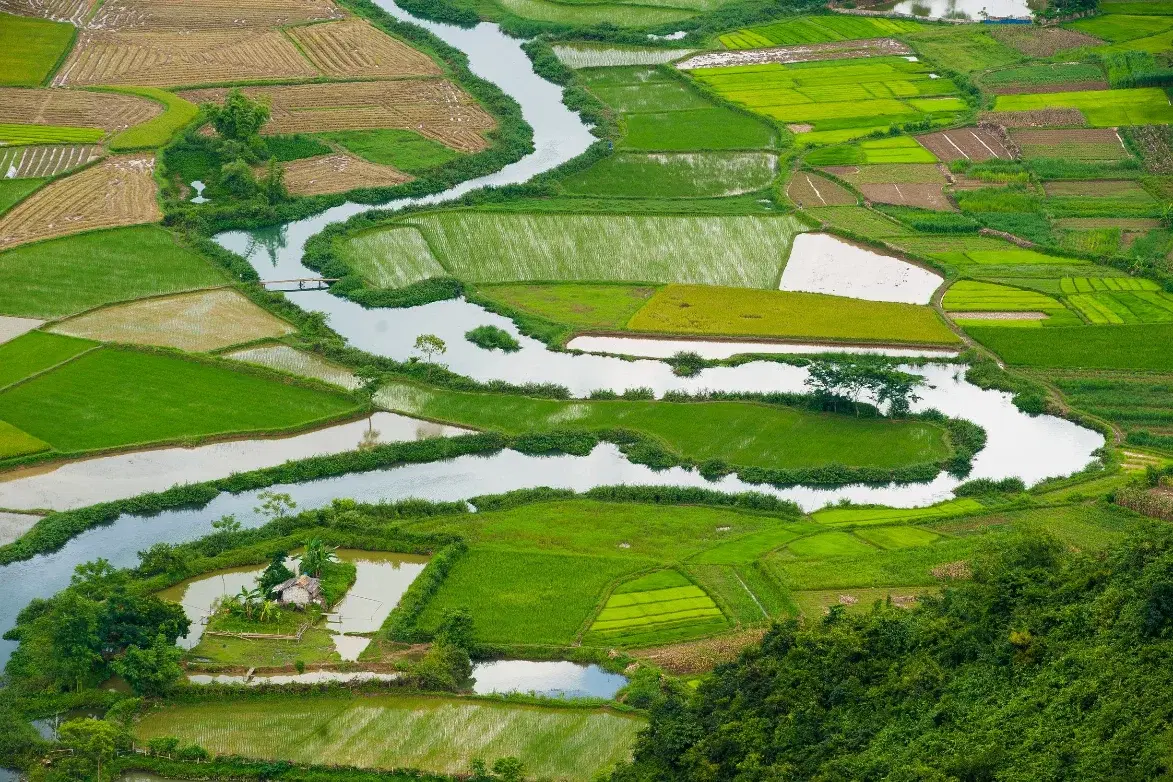
Often called the "Rice Basket of Vietnam," the Mekong Delta produces more than half of Vietnam's rice and is responsible for much of the country's fruit and seafood output. But beyond its agricultural importance, this region offers travelers an authentic glimpse into traditional Vietnamese river life that has remained largely unchanged for centuries.
Picture yourself gliding through narrow canals overhung with water coconut palms, visiting colorful floating markets where vendors sell fresh produce directly from their boats, cycling past endless emerald rice paddies, exploring fruit orchards bursting with tropical flavors, and experiencing the legendary hospitality of Delta locals.
This comprehensive guide will help you plan an unforgettable journey through the Mekong Delta, covering everything from the famous Cai Rang Floating Market to hidden waterways, from practical travel logistics to cultural insights that will enrich your experience in this extraordinary region.
Understanding the Mekong Delta
Geography and Overview
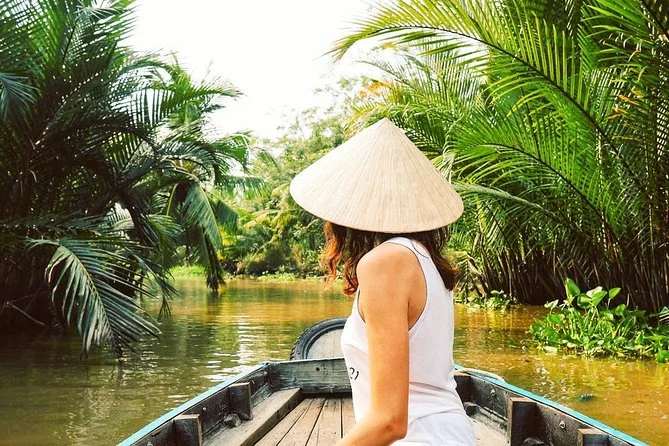
The Mekong Delta encompasses a large portion of southwestern Vietnam, bounded by Cambodia to the north and west, and the South China Sea to the south and east. The region is characterized by its incredibly flat terrain, crisscrossed by thousands of kilometers of rivers, canals, and streams that create a vast wetland ecosystem.
The Mekong River, after traveling 4,350 kilometers from its source in the Tibetan Plateau through China, Myanmar, Thailand, Laos, and Cambodia, finally splits into two main branches as it enters Vietnam: the Tiền River (Front River) and the Hậu River (Back River). These branches further divide into countless smaller channels, creating the delta's distinctive "nine dragons" - the traditional name referring to the river's nine mouths emptying into the sea.
Key Delta Provinces and Cities:
Cần Thơ: The largest city and unofficial capital of the Delta, known for the massive Cai Rang Floating Market
An Giang: Northern Delta province bordering Cambodia, featuring Sam Mountain and Tra Su Cajuput Forest
Vĩnh Long: Central Delta province known for fruit orchards and traditional island homestays
Đồng Tháp: Famous for Tram Chim National Park and lotus flowers
Cà Mau: The southernmost tip of Vietnam, known for U Minh Forest and seafood
Ben Tre: The "Coconut Kingdom" with extensive coconut groves and coconut candy production
The Delta covers approximately 40,500 square kilometers and is home to over 19 million people, making it one of the most densely populated rural regions in the world. Despite rapid development, much of the Delta retains its traditional character, with river life, agriculture, and fishing remaining central to the local economy and culture.
The People and Culture
The Mekong Delta's population is predominantly ethnic Vietnamese (Kinh people), but the region is also home to significant Khmer (Cambodia), Hoa (Chinese), and Cham communities, each contributing to the Delta's rich cultural tapestry.
Delta people are renowned throughout Vietnam for their warmth, hospitality, and laid-back approach to life. The river-focused lifestyle has shaped a distinct regional culture with its own cuisine, music (notably the traditional "đờn ca tài tử" chamber music), festivals, and architectural styles adapted to the watery environment.
The traditional Delta house is built on stilts to cope with seasonal flooding, with floating houses being common along major waterways. Many families live their entire lives on boats, with floating communities creating unique social structures adapted to the aquatic environment.
Agriculture: Vietnam's Rice Basket
The Mekong Delta's fertile alluvial soil, abundant water, and tropical climate create ideal conditions for intensive agriculture. The region produces 23 million tons of rice annually - 54.8% of Vietnam's total output. Provinces like Kiên Giang, An Giang, and Đồng Tháp each produce over 3 million tons of rice per year.
Beyond rice, the Delta is Vietnam's most important region for:
Fruit Production: Dragon fruit, pomelo, longan, rambutan, mangosteen, mango, durian, and countless other tropical fruits
Aquaculture: Pangasius catfish, shrimp, and other seafood (over 3.5 million tons annually)
Coconut Products: Ben Tre province alone has over 60,000 hectares of coconut palms
Rice noodles and vermicelli: Traditional production using age-old methods
This agricultural abundance means that visiting the Mekong Delta offers travelers the chance to taste incredibly fresh, flavorful produce often harvested the same day.
Best Time to Visit the Mekong Delta
Seasons in the Delta
The Mekong Delta has two distinct seasons that significantly impact travel experiences:
Dry Season (December to April)
Weather: Hot and sunny with little rainfall; temperatures 25-35°C
Water Levels: Lower, making some narrow canals less accessible
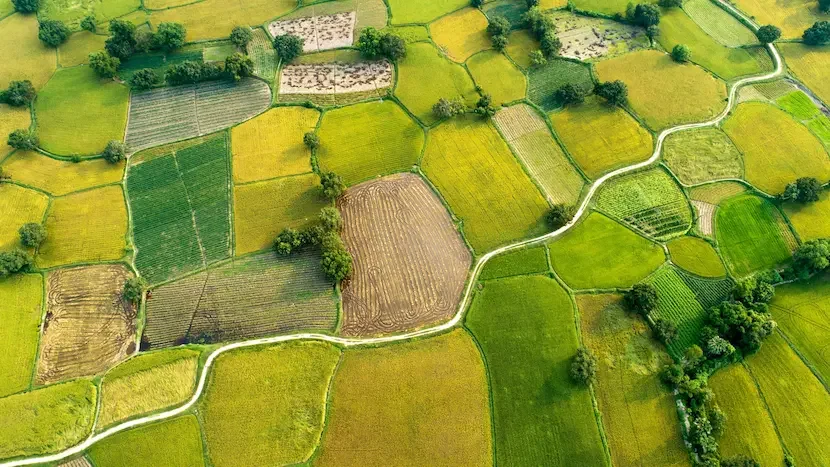
Rice Harvest: Major harvest periods in December-January and April-May
Fruit Season: Peak season for mangoes, longans, and rambutans (March-June)
Advantages:
- Easier travel with minimal rain disruption
- Better road conditions throughout the region
- Clearer waterways for boat tours
- Ideal for cycling and outdoor activities
- Vibrant floating markets with maximum activity
Disadvantages:
- Hotter temperatures, especially March-April
- More tourists, particularly December-February
- Higher accommodation prices during peak season
- Some areas can feel dusty and dry
Best for: First-time visitors, floating market visits, cycling tours, photography
Wet Season (May to November)
Weather: Frequent afternoon rains, high humidity; temperatures 24-32°C
Water Levels: Higher, with some flooding in September-October
Flood Season: September-November when rivers overflow into fields
Fruit Season: Durian, mangosteen, rambutan (June-August)
Advantages:
- Lush, green landscapes at their most beautiful
- Fewer tourists and better prices
- Authentic experience of Delta life adapted to flooding
- Spectacular water scenes during flood season
- Excellent for experiencing traditional flood-adapted culture
Disadvantages:
- Daily rain showers (usually afternoon)
- Some roads and areas become flooded and inaccessible
- Boat schedules can be disrupted
- Outdoor activities limited by weather
- Mosquitoes more prevalent
Best for: Photography enthusiasts, those seeking authentic experiences, travelers on a budget, nature lovers
Month-by-Month Breakdown
December-February: Peak tourist season with ideal weather and full market activity
March-April: Very hot but excellent for fruit orchards and harvest activities
May-June: Early wet season with manageable rains and spectacular green landscapes
July-August: Peak wet season with dramatic scenery and fruit harvest
September-November: Flood season offering unique experiences but requiring flexibility
[VERIFY 2026: Current seasonal patterns and weather conditions]
Recommended Visit Duration: 2-5 days minimum to experience the Delta properly; 7-10 days for comprehensive exploration
Top Destinations in the Mekong Delta
Cần Thơ: The Heart of the Delta
Cần Thơ, with a population of over 1.2 million, is the Delta's largest city and most important transportation hub. Nicknamed "Tây Đô" (Western Capital), it serves as the perfect base for exploring the region.
Cai Rang Floating Market
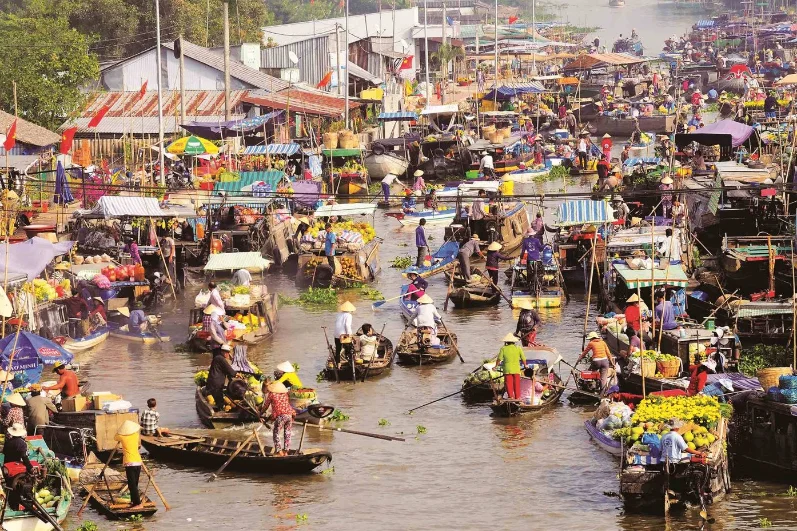
The jewel in Cần Thơ's crown, Cai Rang is Vietnam's largest and most famous floating market, located about 6 kilometers from the city center on the Cần Thơ River.
What makes it special: Unlike smaller floating markets that have declined, Cai Rang remains a working wholesale market where hundreds of boats gather daily to trade fruit, vegetables, and other goods. The market is a genuine economic hub, not just a tourist attraction.
The "bẹo" system: Vendors hang samples of their goods on tall bamboo poles ("bẹo") so buyers cruising by can see what each boat is selling from a distance - a uniquely Delta trading method that's been used for over a century.
Best time to visit: 5:00-7:00 AM when activity is at its peak. The market starts around 2-3 AM and continues throughout the day, but morning is most atmospheric with misty river scenes and bustling trade.
How to visit: Hire a small boat from Ninh Kiều Wharf (cost: 100,000-200,000 VND per person) [VERIFY 2026: current pricing]. Tours typically last 2-3 hours and may include stops at smaller markets, rice noodle workshops, or fruit orchards.
What to see and do:
- Watch the organized chaos of hundreds of boats trading
- Buy fresh fruit directly from vendors
- Try breakfast on a floating coffee boat
- Visit floating shops selling everything from groceries to farming supplies
- Photograph the iconic scene of boats piled high with produce
Insider tip: Stay on the boat and resist vendors who try to take you to coconut candy factories or tourist shops - the market itself is the main attraction.
Other Cần Thơ Attractions
Ninh Kiều Wharf: The city's attractive riverside promenade, perfect for evening strolls, with cafes, restaurants, and river views. The beautifully lit pedestrian bridge offers excellent photo opportunities at sunset.
Cần Thơ Bridge: Southeast Asia's longest cable-stayed bridge, spanning 2.75 kilometers across the Hậu River. Best viewed from river cruises or Ninh Kiều Wharf at night when illuminated.
Bằng Lăng Stork Sanctuary: Located in Thốt Nốt district, this sanctuary hosts thousands of storks and egrets that return each evening at sunset - a spectacular natural phenomenon. Visit around 5:00-6:00 PM for the best viewing.
Ông Pagoda: Beautiful Chinese-Vietnamese temple with ornate architecture
Cần Thơ Museum: Exhibits on Delta history, culture, and ecology
Mỹ Khánh Tourist Village: Fruit orchards and traditional village experience about 40 km from the city
Ben Tre: The Coconut Kingdom
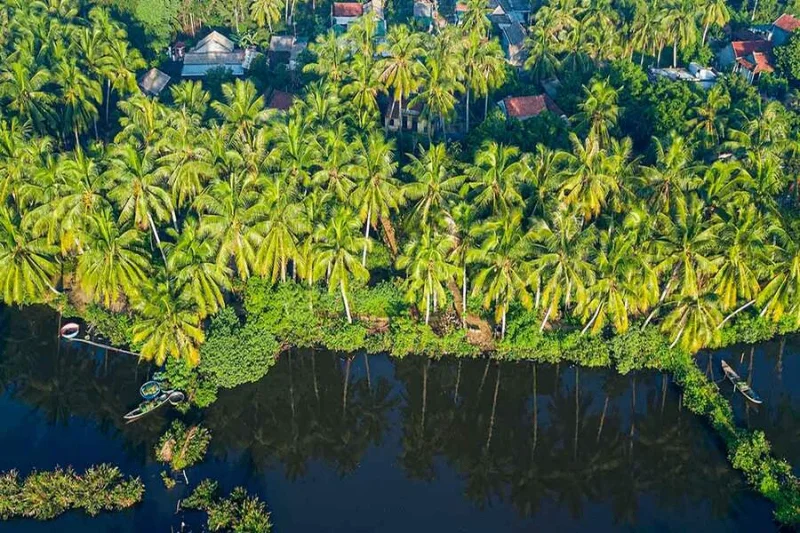
Ben Tre province, located along the Tiền River, is Vietnam's coconut capital with over 60,000 hectares of coconut palms. The province produces coconuts, coconut candy, coconut water, and countless coconut-derived products.
Top experiences:
Coconut candy workshops: Watch traditional candy-making and sample fresh products
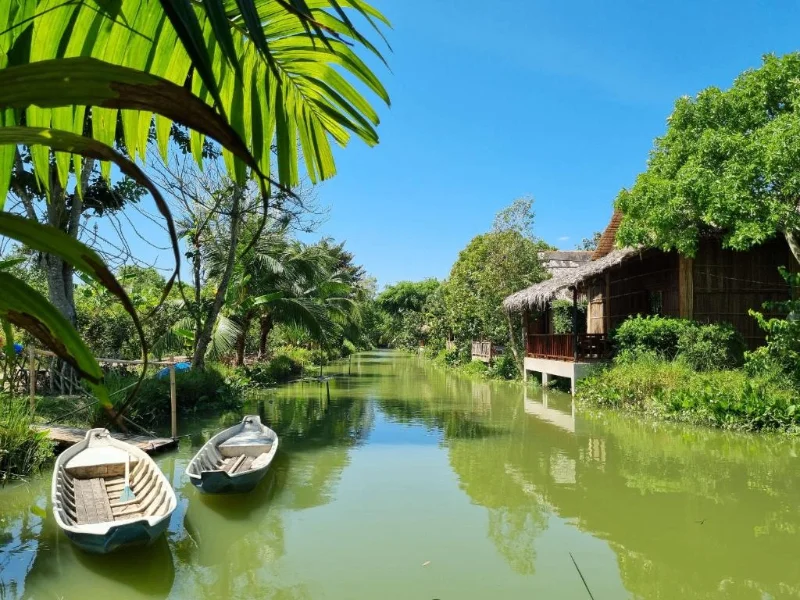
Coconut palm cruises: Navigate narrow canals lined with coconut groves
Cycling tours: Ride through villages and orchards on quiet country lanes
Homestays: Experience authentic Delta life in traditional palm-frond houses
Coconut monk visits: Visit quirky roadside temples and shrines
Honey farms: Sample pure Delta honey from bee farms
Traditional music performances: Evening "đờn ca tài tử" chamber music shows
Best for: Cycling enthusiasts, those seeking rural authenticity, families, food lovers
Recommended duration: 1-2 days, often combined with Cần Thơ or Vĩnh Long
Vĩnh Long: Island Life and Orchards
Vĩnh Long city serves as a gateway to the Delta's most picturesque island communities, particularly on An Bình and Bình Hòa Phước islands in the Tiền River.
Island homestays: Stay with local families in traditional Delta houses, experiencing daily life, home-cooked meals, and genuine hospitality. Homestays include boat transport, cycling, and orchard visits.
Fruit orchards: Vĩnh Long is famous for longans, rambutans, and dragon fruit. Many orchards welcome visitors for tasting and picking (seasonal).
Cai Be Floating Market: Smaller and less touristy than Cai Rang, offering a more intimate floating market experience. Best visited early morning (5:00-7:00 AM).
Traditional crafts: Visit workshops producing rice paper, rice wine, popped rice, and traditional sweets.
Village cycling: Explore narrow island paths through orchards, past small temples, and quiet villages.
Best for: Those seeking authentic cultural immersion, families, photographers, food enthusiasts
Recommended duration: 1-2 days, ideally including an overnight homestay
Chau Doc: Gateway to Cambodia
Located at the northern edge of the Delta on the Hậu River, Châu Đốc is a multicultural border town with Vietnamese, Khmer, Cham, and Chinese influences.
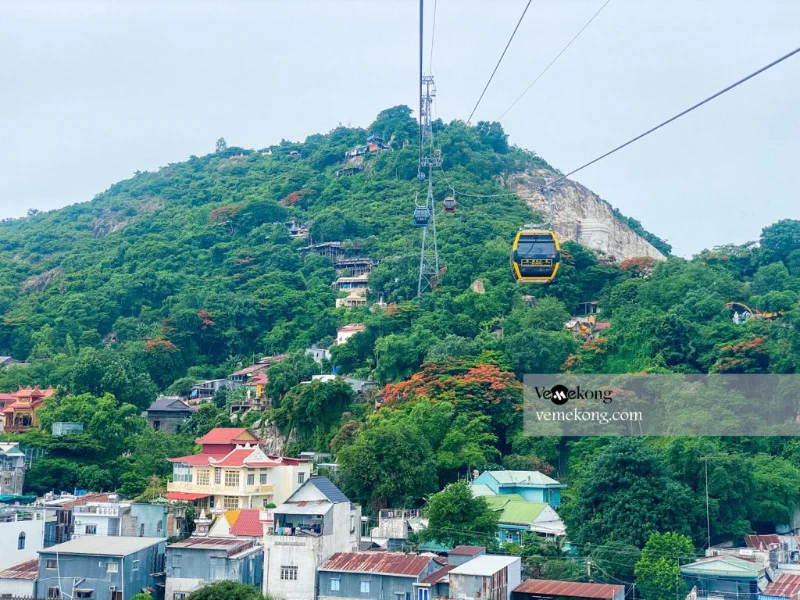
Sam Mountain (Núi Sam): The Delta's most sacred mountain, rising 284 meters above the flat plains. Climb to the summit for spectacular 360-degree views over rice paddies, the river, and Cambodia beyond. The mountain has numerous temples and shrines along the climb.
Floating villages: Châu Đốc has extensive floating house communities where families live entirely on the water, raising fish in submerged cages beneath their homes.
Tra Su Cajuput Forest: A spectacular flooded forest (September-November) accessible by motorized boat and then traditional rowboat. Home to storks, herons, and other waterbirds. The green cathedral of melaleuca trees is one of the Delta's most magical natural areas.
Chăm villages: Visit traditional Muslim Cham communities maintaining distinct cultural practices, including distinctive mosques with Southeast Asian architectural features.
Tây An Pagoda: Unique temple combining Buddhist, Hindu, and Islamic architectural elements
Border crossing: Châu Đốc is a common entry/exit point to Cambodia via river boat to Phnom Penh
Best for: Nature lovers, culture enthusiasts, those heading to/from Cambodia, photographers
Recommended duration: 2-3 days
My Tho and Tien Giang Province
My Tho, just 70 kilometers from Ho Chi Minh City, is often the first taste of the Delta for many travelers making it a popular day-trip destination.
Four Islands Tour: Visit Unicorn Island (Thới Sơn), Dragon Island, Turtle Island, and Phoenix Island via boat, stopping at fruit orchards, honey farms, and coconut candy workshops.
Vĩnh Tràng Pagoda: Impressive temple blending Vietnamese, Chinese, Khmer, and French colonial architectural styles
Tân Thạch Coconut Village: Experience traditional coconut processing and scenic water coconut palm scenery
Dong Tam Snake Farm: Somewhat controversial attraction featuring snake handling and shows
Best for: Day trippers from Saigon, first-time Delta visitors, those with limited time
Recommended duration: Day trip or 1 night
Cà Mau: The Southernmost Point
Cà Mau province occupies Vietnam's southernmost tip, where the Mekong finally meets the sea. This remote region offers adventurous travelers a chance to explore wild coastal areas and pristine mangrove forests.
Cà Mau Cape: Vietnam's southernmost point, marked by a distinctive flag tower
U Minh Ha National Park: Vast cajuput (melaleuca) forest ecosystem, one of Vietnam's most important wetland areas
Nam Can Float Forest: Pristine mangrove forest accessible by boat
Mui Cape Beach: Remote coastal area with fishing villages and seafood
Best for: Adventure travelers, nature enthusiasts, those seeking off-the-beaten-path experiences
Recommended duration: 2-3 days
Other Notable Destinations
Đồng Tháp Province: Tram Chim National Park (bird sanctuary), lotus farms, Xeo Quyt Forest (former Viet Cong base)
Sa Dec: Charming riverside town with colonial architecture, flower nurseries, and connections to Marguerite Duras's novel "The Lover"
Soc Trang: Center of Khmer culture in Vietnam with beautiful Khmer pagodas
Long An: Tan Lap Floating Village, nearest Delta destination to Saigon
Tra Vinh: Significant Khmer population with impressive Khmer temples
Essential Mekong Delta Experiences
Floating Markets
The floating markets are the Mekong Delta's most iconic attraction, though many smaller markets have disappeared as road networks have improved. The major markets still operating include:
Cai Rang (Cần Thơ): Largest and most active, wholesale focus
Cai Be (Vĩnh Long/Tiền Giang border): Smaller, more intimate experience
Phong Điền (Cần Thơ): Small, traditional market less touristy than Cai Rang
Long Xuyên (An Giang): Lesser-known wholesale market
Floating market tips:
- Arrive early (5:00-7:00 AM) for peak activity
- Hire smaller boats for better maneuverability
- Bring cash for purchases
- Try floating breakfast vendors
- Look for the "bẹo" poles to identify what boats are selling
- Be respectful - these are working markets, not theme parks
- Consider visiting both a large and small market for contrast
Cycling Through the Countryside
The Mekong Delta's flat terrain and quiet rural lanes make cycling one of the best ways to experience local life. Cycling allows you to:
- Explore tiny villages inaccessible to cars
- Stop at your own pace for photos and interactions
- Pass through endless rice paddies and fruit orchards
- Cross traditional "monkey bridges" (single log footbridges)
- Visit small temples and local markets
- Experience the countryside at a human pace
Best cycling destinations: Ben Tre, Vĩnh Long islands, An Bình Island, rural areas around My Tho
What to expect: 10-30 km rides on mostly flat terrain, mixture of paved and dirt paths, exposure to sun and heat
Tips:
- Start early to avoid midday heat
- Bring or rent a good bicycle - quality matters
- Wear sunscreen and a hat
- Carry water
- Have small bills for purchases along the way
- Ask before photographing people
Fruit Orchards and Gardens
The Delta's abundant fruit production means travelers can visit working orchards throughout the region. Depending on the season, you might encounter:
Tropical fruits: Dragon fruit, pomelo, longan, rambutan, mangosteen, durian, mango, jackfruit, star fruit, guava, lychee
Orchard activities:
- Walking through orchards with owners explaining cultivation
- Sampling fresh fruit directly from trees
- Learning about traditional growing methods
- Photographing fruit trees and landscapes
- Purchasing fresh fruit at wholesale prices
Best orchard destinations: Vĩnh Long (especially An Bình Island), Cần Thơ (Phong Điền district), Ben Tre, My Tho, Tiền Giang
Seasonal guide:
- Year-round: Dragon fruit, coconut, banana, papaya
- Feb-May: Mango, jackfruit
- May-Aug: Durian, mangosteen, rambutan, longan
- Aug-Oct: Pomelo
- Oct-Dec: Persimmon
River Cruises and Boat Tours
Water is the lifeblood of the Delta, and experiencing the region by boat is essential. Options range from short trips to multi-day cruises:
Day boat tours:
- Floating market visits (3-4 hours)
- Island hopping tours (half-day to full-day)
- Canal cruises through narrow waterways
- Sunset river cruises
Overnight boat stays:
- Traditional "ghe" boat homestays
- Converted rice barges with cabins
- Budget to midrange floating guesthouses
Luxury river cruises:
- Multi-day cruises from Saigon to Cambodia
- All-inclusive with meals, activities, and guides
- Comfortable cabins with modern amenities
- Shore excursions included
Boat types you'll encounter:
- Small motorized boats (3-6 passengers) for market visits
- Traditional rowboats for narrow canals
- Large ferries for river crossings
- Converted rice barges for overnight stays
- Luxury cruise ships for multi-day journeys
Homestays and Local Life
Staying with Delta families provides authentic cultural immersion rarely found in hotels. Homestays allow you to:
- Share home-cooked meals prepared with local ingredients
- Learn traditional crafts and cooking methods
- Understand daily Delta life and challenges
- Practice Vietnamese with friendly hosts
- Sleep in traditional Delta-style houses
- Make genuine connections with local people
Best homestay locations: Vĩnh Long islands (An Bình, Bình Hòa Phước), Ben Tre, rural areas of Cần Thơ
What to expect:
- Simple but clean rooms with mosquito nets
- Shared bathrooms (usually clean and functional)
- Family-style meals featuring Delta cuisine
- Limited English but lots of smiles
- Genuine curiosity about your life and travels
- Sometimes evening traditional music performances
- Early wake-ups (roosters, market preparations, etc.)
Homestay tips:
- Book through reputable agencies or direct via email
- Bring small gifts (fruit, snacks, or items from your country)
- Respect local customs and modest dress
- Participate in family activities if invited
- Learn a few Vietnamese phrases
- Be flexible and go with the flow
- Provide fair compensation for hospitality
Traditional Crafts and Industries
The Delta has maintained many traditional production methods that visitors can observe:
Rice paper making: Watch artisans create the translucent sheets used for spring rolls
Coconut candy production: See traditional candy-making in Ben Tre workshops
Rice wine distilling: Observe traditional alcohol production methods
Pop rice making: Fascinating traditional process of puffing rice
Fish sauce production: Visit factories producing this essential Vietnamese condiment
Rice vermicelli making: Traditional noodle production using sunlight to dry
Pottery and ceramics: Traditional kilns still operating in some areas
Boat building: Watch craftsmen construct traditional wooden boats
Tips for craft visits:
- Many workshops expect you to purchase products
- Negotiate prices politely if buying
- Ask permission before photographing production processes
- Show genuine interest in the craft
- Small tips are appreciated for demonstrations
Food and Culinary Experiences
The Mekong Delta's cuisine showcases the region's agricultural bounty:
Signature dishes:
Cá lóc nướng trui: Grilled snakehead fish, a Delta specialty
Lẩu mắm: Fermented fish hotpot, intense and delicious
Bánh xèo: Crispy rice flour pancakes with shrimp and pork
Bún nước lèo: Rice noodles with fish broth (Khmer influence)
Bánh cống: Crispy rice cake with shrimp and mung bean filling
Hủ tiếu Mỹ Tho: Famous My Tho-style pork noodle soup
Gỏi củ sen: Lotus root salad
Cá tai tượng: "Elephant ear" fish, served sizzling on a stand
Fruits in every form: Fresh, dried, candied, in desserts
Delta coconut dishes: Coconut curries, coconut-steamed fish, coconut milk desserts
Culinary activities:
- Morning market tours followed by cooking classes
- Fruit tasting in orchards
- Street food tours in Can Tho or My Tho
- Homestay meals featuring family recipes
- Floating market breakfast from boat vendors
Practical Information
Getting to the Mekong Delta
From Ho Chi Minh City
By bus: Most convenient and economical option
- Multiple bus companies (Phương Trang/Futa Bus, Mai Linh Express, Kumho Samco)
- Frequent departures (every 30-60 minutes) to major Delta cities
- Air-conditioned coaches with WiFi
- Prices: 80,000-150,000 VND depending on destination [VERIFY 2026: current pricing]
- Journey times: My Tho (2 hours), Ben Tre (2.5 hours), Vĩnh Long (3 hours), Cần Thơ (3.5-4 hours)
- Departure points: Miền Tây Bus Station, travel agencies in District 1
By private car/van:
- Most comfortable but expensive option
- Can be hired through hotels or travel agencies
- Allows stops along the way
- Cost: 80-120 USD for Ho Chi Minh City to Cần Thơ (prices vary) [VERIFY 2026: current pricing]
By tour:
- Day tours or multi-day packages including transport
- Convenient but less flexible
- English-speaking guides included
- Prices: 25-100 USD per day depending on inclusions [VERIFY 2026: current pricing]
By motorcycle:
- Popular with experienced riders
- Allows complete flexibility
- Takes 4-6 hours to Can Tho depending on route
- Rent in HCMC for 150,000-250,000 VND per day [VERIFY 2026: current pricing]
By boat:
- Luxury cruises depart from central Saigon
- Multi-day itineraries combining transport and accommodation
- High-end option
From Other Regions
From Cambodia: Enter via Chau Doc border crossing
From Central Vietnam: Fly to Can Tho International Airport
Within the Delta: Local buses connect all major towns
Getting Around the Delta
Between towns:
- Local buses (cheap, frequent, basic)
- Tourist buses (more comfortable)
- Rented car or motorcycle
- Boat connections along major waterways
Within destinations:
- Xe ôm (motorbike taxi): Negotiable fare
- Taxi/Grab: Available in larger cities
- Bicycle rental: 20,000-50,000 VND per day [VERIFY 2026: current pricing]
- Boats: Essential for many attractions
Accommodation Options
Homestays: 100,000-300,000 VND per person including meals [VERIFY 2026: current pricing]
Budget guesthouses: 150,000-400,000 VND per room
Mid-range hotels: 400,000-1,000,000 VND per room
Luxury resorts: 1,500,000 VND and up
Luxury river cruises: 150-500 USD per night all-inclusive [VERIFY 2026: current pricing]
Booking tips:
- Book homestays through reputable agencies or tour operators
- Hotels can often be booked upon arrival except during Tet holiday
- Cần Thơ has the widest range of accommodation
- Consider location relative to early morning market visits
Budgeting
Budget travelers: 15-25 USD per day (homestays, local food, public transport)
Mid-range travelers: 40-70 USD per day (hotels, tours, restaurants)
Luxury travelers: 150+ USD per day (luxury hotels, private tours, cruises)
Typical costs [VERIFY 2026: all pricing]:
- Meals: 30,000-100,000 VND
- Boat tours: 100,000-500,000 VND per person
- Bicycle rental: 20,000-50,000 VND per day
- Homestay: 200,000-300,000 VND per person including meals
- Hotel: 300,000-1,500,000 VND per room
- Inter-city bus: 80,000-200,000 VND
Health and Safety
Common issues:
- Heat exhaustion: Stay hydrated, avoid midday sun
- Mosquito-borne illnesses: Use repellent, especially near water
- Food/water hygiene: Eat at busy places, drink bottled water
- Sun exposure: Wear sunscreen, hat, and protective clothing
Recommended precautions:
- Bring anti-diarrheal medication
- Use mosquito repellent containing DEET
- Consider malaria prophylaxis for remote areas (consult doctor)
- Bring rehydration salts for hot weather
- Have travel insurance covering medical evacuation
Safety considerations:
- The Delta is generally very safe for travelers
- Petty theft can occur in tourist areas - watch belongings
- River swimming can be dangerous due to currents and boat traffic
- Roads can be chaotic - drive or ride defensively
- Flooding during wet season can make some areas temporarily inaccessible
What to Pack
Essential items:
- Sun protection: High SPF sunscreen, hat, sunglasses
- Light, breathable clothing
- Insect repellent (DEET-based)
- Rain jacket or poncho (wet season)
- Comfortable walking shoes and sandals for boat trips
- Quick-dry clothes
- Small backpack for day trips
- Waterproof bag/case for electronics
- Cash (many rural areas don't accept cards)
- Basic first aid supplies
- Water bottle with filter or purification tablets
Optional but useful:
- Binoculars for bird watching
- Headlamp or flashlight
- Vietnamese phrasebook or translation app
- Small gifts for homestay families
- Waterproof camera or phone case
- Modest clothing for temple visits
- Swimming attire for some accommodations
Cultural Tips and Etiquette
General behavior:
- Remove shoes when entering homes and some temples
- Dress modestly (cover shoulders and knees for temples)
- Ask permission before photographing people
- Learn basic Vietnamese greetings
- Show respect for Buddhist practices and symbols
- Bargain politely at markets but don't be aggressive
Homestay etiquette:
- Accept offered food and drink graciously
- Offer to help with simple tasks
- Respect family space and privacy
- Keep noise levels down, especially at night
- Show appreciation and write positive reviews
Do's:
- Smile and greet people
- Show interest in local culture and practices
- Try local foods, even if unfamiliar
- Be patient with language barriers
- Support local businesses and artisans
Don'ts:
- Touch people's heads (considered sacred)
- Point feet at people or religious objects
- Display public affection excessively
- Raise your voice or show anger
- Litter or damage the environment
- Disrespect religious sites or practices
Sample Itineraries
2-Day Express Tour
Day 1: Cần Thơ
- 5:00 AM: Cai Rang Floating Market tour
- 9:00 AM: Return to hotel, breakfast, rest
- 11:00 AM: Visit Ninh Kiều Wharf area
- 1:00 PM: Lunch at local restaurant
- 3:00 PM: Visit Bằng Lăng Stork Sanctuary
- 6:00 PM: Riverside dinner and evening walk
Day 2: Cần Thơ to Ben Tre
- 8:00 AM: Depart for Ben Tre
- 10:00 AM: Boat cruise through coconut groves
- 12:00 PM: Lunch with local family
- 2:00 PM: Cycling tour through villages
- 4:00 PM: Coconut candy workshop
- 6:00 PM: Return to HCMC or overnight in Ben Tre
4-Day Classic Delta Experience
Day 1: My Tho & Ben Tre
- Morning departure from HCMC
- Boat tour to My Tho islands
- Lunch in local restaurant
- Afternoon: Ben Tre coconut village and cycling
- Overnight: Ben Tre homestay
Day 2: Vĩnh Long
- Morning boat to Vĩnh Long islands
- Visit fruit orchards and Cai Be Floating Market
- Lunch with homestay family
- Afternoon cycling on An Bình Island
- Evening: Traditional music performance
- Overnight: Island homestay
Day 3: Cần Thơ
- Transfer to Cần Thơ
- Afternoon: Cần Thơ city exploration
- Evening: Ninh Kiều Wharf and dinner
- Overnight: Cần Thơ hotel
Day 4: Cần Thơ & Return
- 5:00 AM: Cai Rang Floating Market
- 9:00 AM: Breakfast and rest
- 11:00 AM: Optional visits or shopping
- 1:00 PM: Return journey to HCMC
7-Day Comprehensive Delta Tour
Days 1-2: My Tho, Ben Tre (as above)
Days 3-4: Vĩnh Long & Sa Dec
- Vĩnh Long islands
- Sa Dec town and flower nurseries
- Overnight homestays
Days 5-6: Cần Thơ
- Floating markets
- Thot Not district
- Phong Dien floating market
- City attractions
- Day trip to nearby provinces
Day 7: Châu Đốc
- Sam Mountain
- Floating villages
- Tra Su Forest
- Optional: Continue to Cambodia or return to HCMC
10-Day In-Depth Delta Exploration
Combine the 7-day itinerary above with:
- 2 days in Chau Doc including Tra Su Forest
- 1 day in Dong Thap (Tram Chim National Park)
- Optional extension to Ca Mau
Responsible Travel in the Mekong Delta
Environmental Considerations
The Mekong Delta faces significant environmental challenges including:
- Upstream dam construction reducing sediment flow
- Coastal erosion and land loss
- Saltwater intrusion threatening agriculture
- Climate change and sea level rise
- Plastic pollution in waterways
- Mangrove forest degradation
How travelers can help:
- Refuse single-use plastics; bring reusable water bottles and bags
- Choose tour operators committed to environmental responsibility
- Support conservation projects and national parks
- Dispose of waste properly; never litter in waterways
- Choose accommodation with environmental policies
- Learn about and respect local ecosystems
- Consider carbon offsetting for flights
- Support sustainable agriculture by buying local products
Sustainable Tourism
Support local communities:
- Choose locally-owned accommodation and tour operators
- Buy handicrafts directly from artisans
- Eat at family-run restaurants
- Pay fair prices for services and products
- Hire local guides
- Stay in homestays to directly support families
Cultural sensitivity:
- Respect local customs and traditions
- Ask permission before photographing people
- Learn some Vietnamese phrases
- Dress appropriately for cultural sites
- Support preservation of traditional crafts
- Attend authentic cultural performances
- Show genuine interest in local culture
Ethical wildlife tourism:
- Avoid attractions exploiting animals
- Support genuine conservation efforts
- Observe wildlife from respectful distances
- Never feed wild animals
- Choose bird sanctuaries with conservation focus
Climate Change and the Delta's Future
The Mekong Delta is one of the world's most vulnerable regions to climate change. Rising sea levels, increased salinity, and changing weather patterns threaten the livelihoods of millions of people and Vietnam's food security.
By visiting responsibly, you support local communities adapting to these changes while enjoying one of Southeast Asia's most remarkable regions. Your tourism dollars can help fund adaptation efforts and provide economic alternatives to environmentally damaging practices.
Vietnam Entry Requirements for Delta Travelers
Before embarking on your Mekong Delta adventure, ensure you have proper visa documentation for Vietnam entry.
E-Visa for Extended Delta Exploration
For travelers planning comprehensive Delta exploration (typically 5-14 days), the Vietnam e-Visa offers convenient, extended stays:
E-Visa benefits:
- Valid for up to 90 days
- Single or multiple entry options
- Apply online before travel
- Valid for all entry points including Ho Chi Minh City
- No additional paperwork upon arrival
The e-Visa is ideal for travelers who want flexibility to explore the Delta thoroughly or combine their visit with other Vietnamese regions.
Visa on Arrival Option
For last-minute Delta trips, Vietnam's visa on arrival service allows you to obtain your visa at Tan Son Nhat International Airport in Ho Chi Minh City, the main gateway to the Mekong Delta region.
Requirements:
- Pre-approval letter arranged online before flight
- Valid for airport arrival only
- Quick processing at immigration
- Ideal for spontaneous travel plans
Multi-Region Vietnam Travel
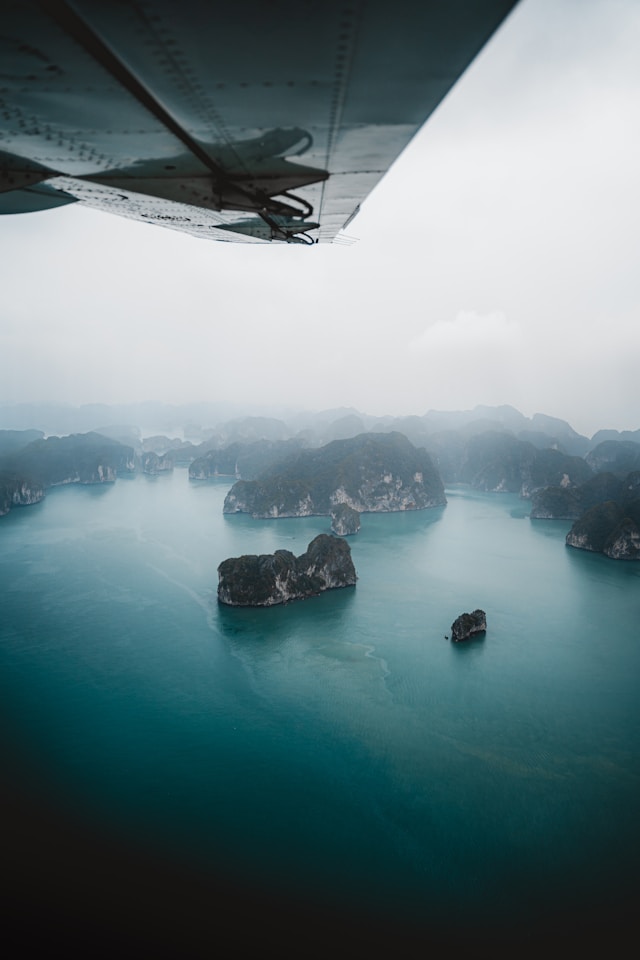
If your itinerary includes the Mekong Delta along with other regions (Hanoi, Halong Bay, Central Vietnam), ensure your visa covers your entire stay. The e-Visa's 90-day validity and multiple-entry option provides maximum flexibility for comprehensive Vietnam exploration.
Border Crossing Considerations
Travelers combining Mekong Delta visits with Cambodia travel:
- Châu Đốc is a popular Delta exit point to Cambodia
- Ensure your visa allows multiple entries if you plan to return
- Some travelers enter Vietnam via Phnom Penh-Châu Đốc river route
- Check current border crossing requirements for both countries
Arrange your Vietnam visa before your trip to ensure smooth entry and maximum time enjoying the Delta's incredible floating markets, river life, and warm hospitality.
Conclusion: The Mekong's Timeless Appeal
The Mekong Delta offers travelers something increasingly rare in modern tourism: authenticity. While Vietnam's coastal cities race toward development and international tourism, the Delta maintains its traditional rhythm dictated by the rise and fall of rivers, the changing seasons, and centuries-old ways of life adapted to the water.
From the organized chaos of Cai Rang's floating market to quiet moments cycling through endless rice paddies, from the warmth of homestay families to the taste of fruit picked fresh from the tree, from sunrise boat trips through narrow canals to evenings watching storks return to their roosts - the Delta rewards travelers who slow down, embrace the region's unhurried pace, and open themselves to genuine cultural exchange.
The Mekong Delta is not about checking off landmarks or collecting Instagram photos (though you'll take plenty). It's about understanding how millions of people have built their lives around water, how a river system sustains entire communities, how traditional knowledge and modern challenges intersect, and how warmth and hospitality transcend language barriers.
Key Takeaways:
- Best time: December-April for weather; May-November for lush landscapes and fewer tourists
- Must-see: Cai Rang Floating Market, Ben Tre coconut villages, Vĩnh Long homestays
- Duration: Minimum 2-3 days; 5-7 days ideal for comprehensive experience
- Top experiences: Floating markets, homestays, cycling tours, boat journeys, fruit orchards
- Getting there: 2-4 hours from Ho Chi Minh City by bus or private transport
- Budget: Very affordable; 20-70 USD per day covers most travel styles
- Best for: Travelers seeking authenticity, culture enthusiasts, food lovers, photographers, families
As upstream dams, climate change, and development pressure transform the Delta, visiting now means experiencing a way of life that may change dramatically in coming decades. The floating markets still bustle, the rivers still flow, families still farm their ancestral lands, and visitors still receive genuine Delta hospitality.
The Mekong Delta is Vietnam's heart - fertile, generous, warm, and endlessly fascinating. It's waiting to share its stories with you.
Share:
Created: Mar 08, 2026 | Modified: Mar 10, 2026
Related Posts
Vietnam Digital Arrival Card 2026: Complete Guide
Vietnam now requires all foreign travelers to complete a free Digital Arrival Card before landing at five major international airports. The online Pre-Arrival Information (PAI) system replaces the old paper form and generates a QR code you present at immigration. This guide walks you through the entire process, which airports are covered, common mistakes to avoid, and what to expect at the border.
Vietnam SIM Card & Internet Guide 2026: Complete Connectivity Handbook for Travelers
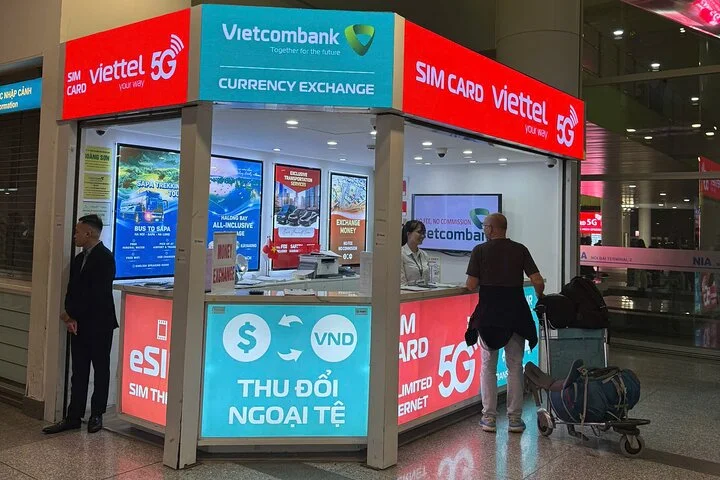
Staying connected during your Vietnam trip is essential for navigation, communication, booking services, and sharing your experiences. Vietnam offers excellent mobile connectivity with three major providers (Viettel, Vinaphone, Mobifone) offering affordable data plans, widespread 4G coverage, and expanding 5G networks. Tourist SIM cards are readily available at airports, convenience stores, and mobile shops, with unlimited data plans starting from just $3-5 USD. This comprehensive guide covers everything you need to know about purchasing SIM cards, choosing the right data plan, understanding eSIM options, finding WiFi, and staying connected throughout Vietnam in 2026.
Vietnam Visa Overstay: New Fines & Penalties (Decree 282/2025)
Vietnam doubled its maximum visa overstay fine to VND 40 million (~$1,520) under Decree 282/2025, effective December 15, 2025. The new rules introduce 7 escalating fine brackets, allow deportation from just 16 days of overstay, and carry long-term consequences including blacklisting and entry bans. This guide breaks down the full fine schedule, explains what to do if you have already overstayed, and shows you how to prevent it.
Table of Contents
- Introduction: Welcome to the Mekong Delta
- Understanding the Mekong Delta
- Geography and Overview
- The People and Culture
- Agriculture: Vietnam's Rice Basket
- Best Time to Visit the Mekong Delta
- Seasons in the Delta
- Month-by-Month Breakdown
- Top Destinations in the Mekong Delta
- Cần Thơ: The Heart of the Delta
- Ben Tre: The Coconut Kingdom
- Vĩnh Long: Island Life and Orchards
- Chau Doc: Gateway to Cambodia
- My Tho and Tien Giang Province
- Cà Mau: The Southernmost Point
- Other Notable Destinations
- Essential Mekong Delta Experiences
- Floating Markets
- Cycling Through the Countryside
- Fruit Orchards and Gardens
- River Cruises and Boat Tours
- Homestays and Local Life
- Traditional Crafts and Industries
- Food and Culinary Experiences
- Practical Information
- Getting to the Mekong Delta
- Getting Around the Delta
- Accommodation Options
- Budgeting
- Health and Safety
- What to Pack
- Cultural Tips and Etiquette
- Sample Itineraries
- 2-Day Express Tour
- 4-Day Classic Delta Experience
- 7-Day Comprehensive Delta Tour
- 10-Day In-Depth Delta Exploration
- Responsible Travel in the Mekong Delta
- Environmental Considerations
- Sustainable Tourism
- Climate Change and the Delta's Future
- Vietnam Entry Requirements for Delta Travelers
- E-Visa for Extended Delta Exploration
- Visa on Arrival Option
- Multi-Region Vietnam Travel
- Border Crossing Considerations
- Conclusion: The Mekong's Timeless Appeal